Why 'Broken In' Hiking Boots Still Give You Blisters — the Real Culprit
Quick Answer: Blisters in properly broken-in boots are usually a sock system problem, not a boot problem — a single thick cotton sock traps moisture and lets your foot shift inside the boot. Switching to a thin liner sock plus a cushioned wool outer sock eliminates most ‘break-in’ blisters within one hike.
You wore the boots around the house for two weeks. You did the mall walks. By mile 4 on the actual trail, there’s a hot spot forming anyway. Before you blame the boots, there’s a layer of the system most people skip entirely — and it’s not the boots at all.
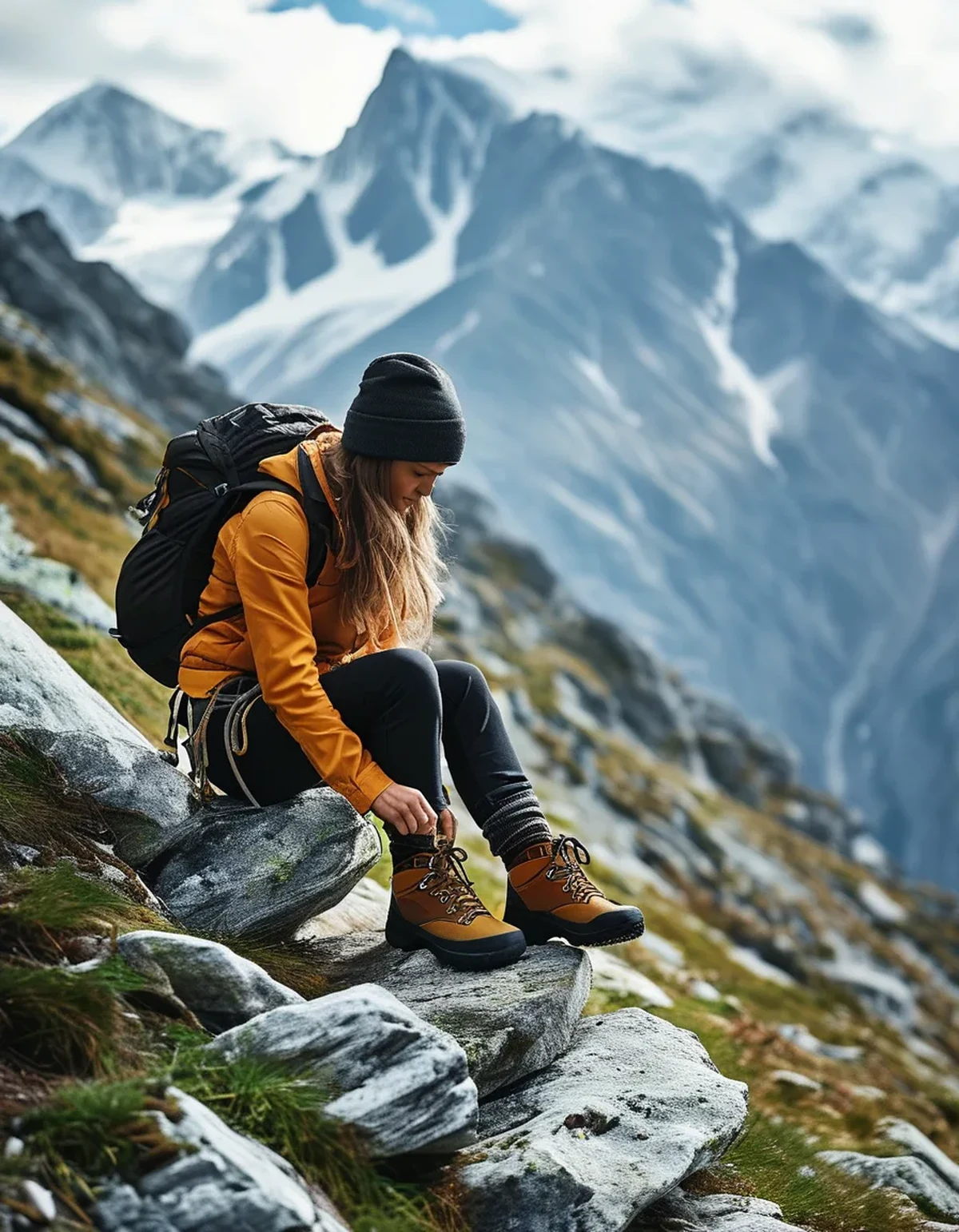
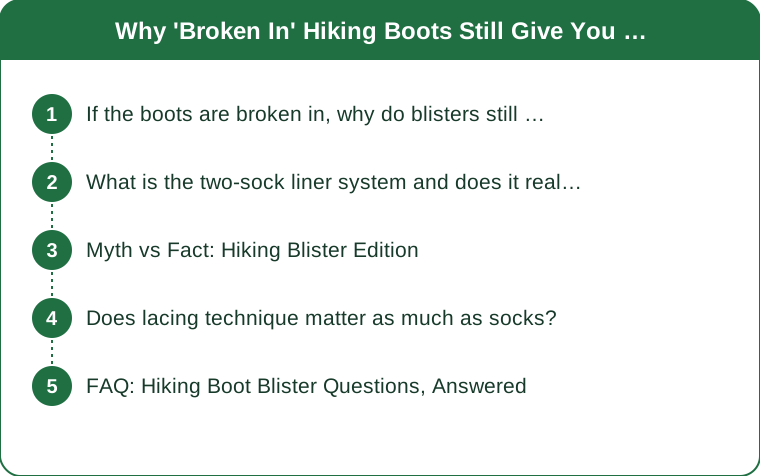
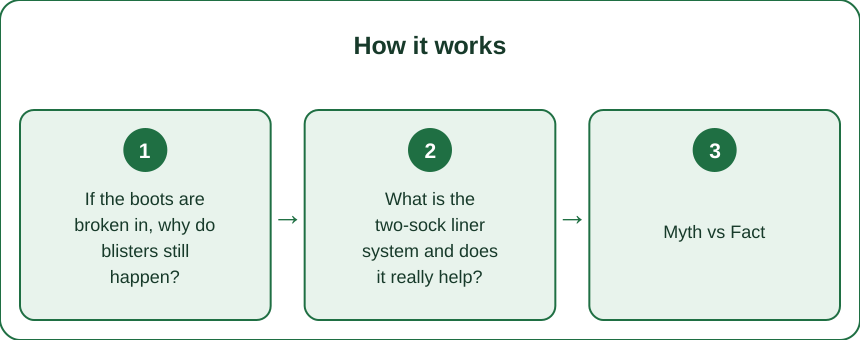
If the boots are broken in, why do blisters still happen?
Because break-in solves boot stiffness, not foot movement inside the boot. Even a perfectly flexible boot lets your foot slide slightly with every step — forward on descents, side to side on uneven ground — and that repeated micro-friction is what actually causes blisters, not boot rigidity.
A single sock layer can’t stop that movement. It just gives the friction one surface to happen against: your skin.
What is the two-sock liner system and does it really help?
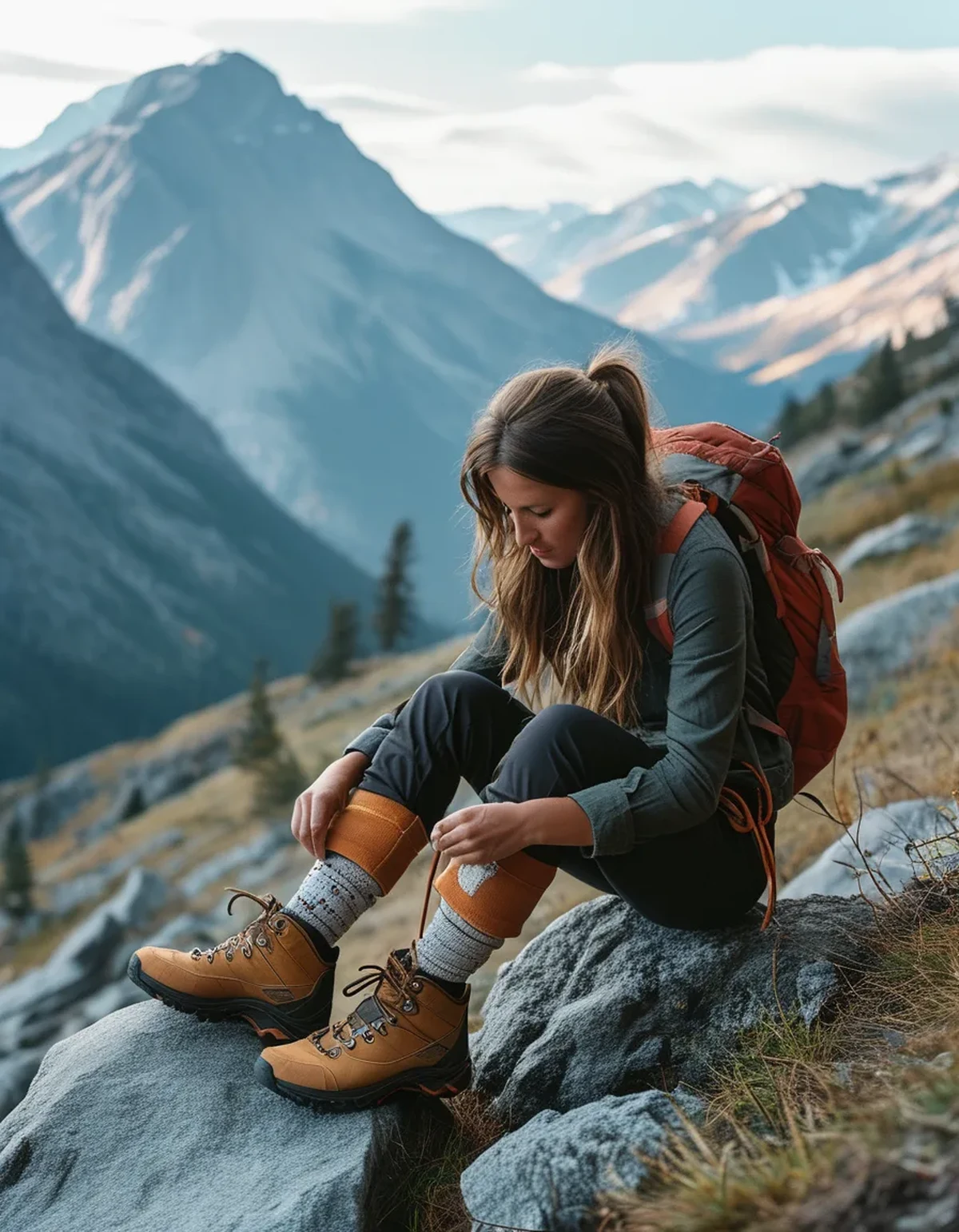
A thin, moisture-wicking liner sock (synthetic or thin wool) worn under a cushioned hiking sock creates two surfaces that rub against each other instead of one surface rubbing against your skin. The friction happens sock-to-sock, where it’s harmless, rather than sock-to-skin, where it forms blisters.
This single change resolves a large share of ‘mystery’ blisters in boots that are otherwise properly fitted and broken in — it’s frequently the missing piece, not the boots.
Myth vs Fact: Hiking Blister Edition
Myth: Thicker socks prevent blisters. Fact: Thick cotton socks hold moisture against skin, and wet skin blisters faster than dry skin — thickness without moisture-wicking can make things worse, not better.
Myth: More break-in time always helps. Fact: Past a certain point (usually 15-20 miles of wear), additional break-in stops changing anything. If blisters persist past that, the sock system or lacing is the next thing to fix, not more wearing-in.
Myth: Blisters mean the boots are the wrong size. Fact: Correctly-sized boots still blister with the wrong sock system. Size and sock system are two separate variables — test them one at a time.
Does lacing technique matter as much as socks?
Yes, especially for downhill blisters specifically. A heel-lock lacing pattern (crossing laces through the top hook eyelets before tying) pins the heel in place and stops the forward slide that causes toe-box blisters on descents.
Combine heel-lock lacing with the two-sock system and most remaining hot spots — the ones sock changes alone don’t fix — usually resolve.
FAQ: Hiking Boot Blister Questions, Answered
How do I know if it’s a sizing issue vs. a sock issue?
If blisters form in the same exact spot every hike regardless of socks, suspect sizing or lacing. If the location varies or only shows up on long or wet hikes, it’s more likely a sock/moisture issue.
Should hiking socks be tight or loose?
Snug without compression marks — a sock that bunches inside the boot creates its own friction point, while one that’s too tight restricts circulation.
Do blister prevention balms or tape work as well as sock changes?
They help as a backup on known hot spots, but they treat a symptom. Fixing the sock system usually prevents new hot spots from forming in the first place, rather than just managing existing ones.
TL;DR:
- Boot break-in fixes stiffness, not the foot-slide that actually causes blisters
- A thin liner sock under a cushioned outer sock moves friction off your skin
- Cotton and thick-alone socks trap moisture, which blisters faster, not slower
- Add heel-lock lacing for descent-specific blisters the sock system doesn’t fully solve
Before you replace a boot that fits fine, replace your sock system first — it’s the cheaper fix and it’s usually the actual cause.
Keep Reading
This article is for general informational and styling purposes only. Fit, sizing, and product availability may vary — check current details before purchasing.