The Complete Guide to Hiking Through the Autumn Transition
Quick Answer: Autumn hiking fails on three things: daylight, temperature range, and surface. Days shorten by minutes every week, so a route that finished comfortably in August finishes in the dark in October. The gap between a sunny valley and a windy summit widens enormously. And wet leaves over rock or root are among the most slippery surfaces you will walk on. Fix those three - plan by sunset rather than by distance, layer for the widest point of the range, and change your footwear and pace for the surface - and autumn becomes the best hiking season of the year.
The walking is better. The margins are thinner. This guide covers both.
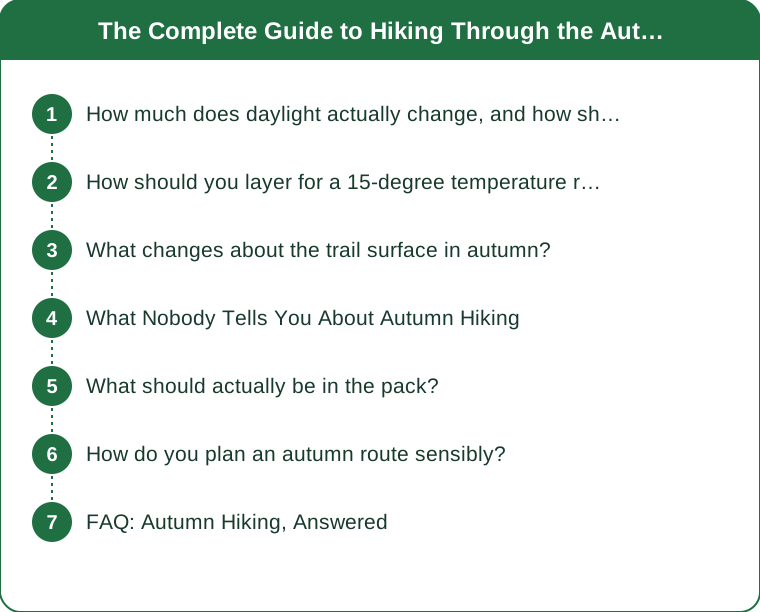
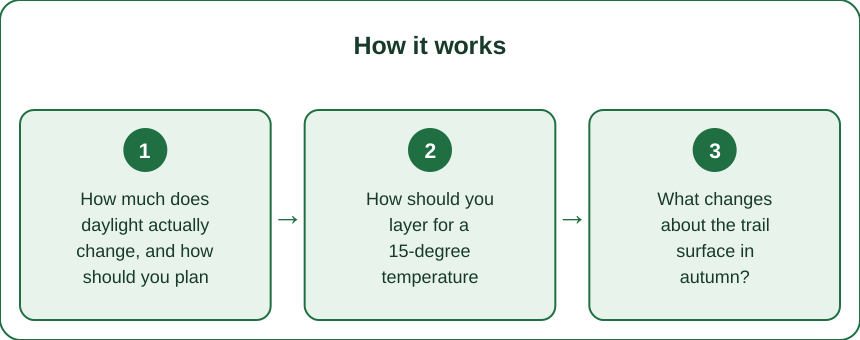
How much does daylight actually change, and how should you plan around it?
Daylight shortens fastest around the equinox, losing several minutes each day at temperate latitudes - which means a route walked three weeks ago finishes noticeably later relative to sunset.
People plan by distance and pace and forget the fixed deadline at the end, which is the single most common autumn hiking mistake.
Plan backwards from sunset rather than forwards from your start time. Take the sunset time, subtract an hour of buffer, and that is your true finish deadline.
Twilight in woodland ends much earlier than the official sunset time, often by thirty minutes or more under canopy, so a forest descent is dark well before the sky is.
Autumn walking is slower than summer walking on the same route because of surface conditions, so your usual pace estimate will over-promise.
Carry a head torch on every autumn walk, without exception, including short ones - it weighs almost nothing and it is the difference between an inconvenience and an emergency.
Check that the torch works and the batteries are fresh at the start of the season, since it has probably sat unused since spring.
And have a turnaround time rather than a turnaround point, so that the decision is made by the clock rather than by how close the summit looks.
Write the sunset time on your hand or your map if that helps, because the number you looked up at breakfast is easy to lose track of by mid-afternoon.
Group walks are slower than solo walks, often considerably, and autumn is the season where that difference becomes a safety issue rather than an inconvenience.
Build in stopping time as well as walking time - lunch, photographs, navigation checks and layer changes all consume more of an autumn day than people budget for.
How should you layer for a 15-degree temperature range?
Autumn produces the widest temperature range of any season on a single walk - a cold start, a warm sunny climb, a wind-exposed summit, and a cooling descent.
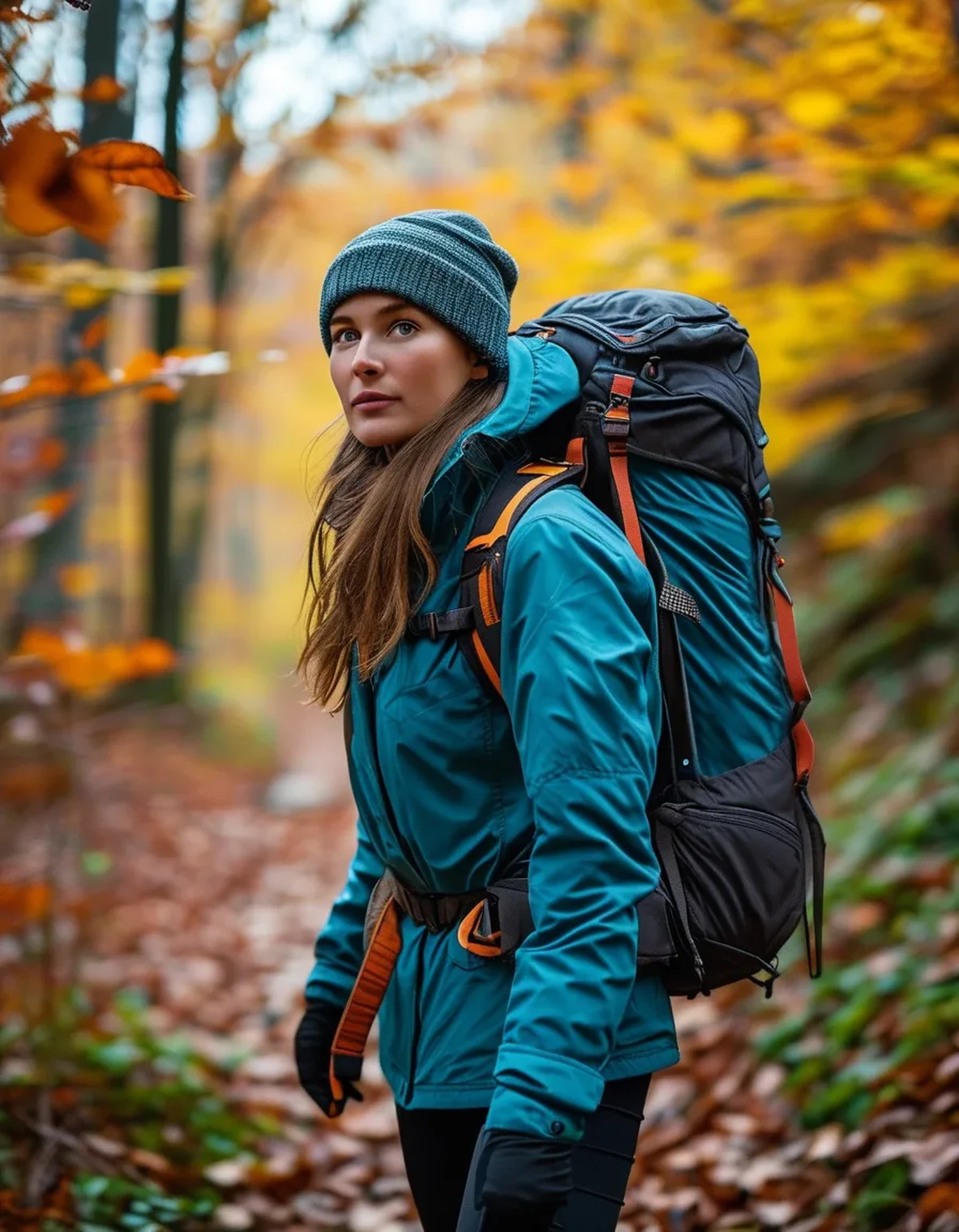
The layering principle is a base that moves moisture, a mid layer that insulates, and a shell that stops wind and rain, adjusted continuously rather than set once.
Adjust before you need to, not after. Take a layer off before you sweat into it and put one on before you get cold, because both are much harder to reverse.
Wind is what actually makes you cold on an autumn summit, far more than air temperature, and a wind shell is the highest-value item in the pack for its weight.
Never wear cotton next to skin. Wet cotton holds water against you and stays cold, which is the classic mechanism behind hikers becoming genuinely hypothermic in mild autumn conditions.
Carry a warm layer you do not expect to use, because the scenario that needs it is the one where you are stopped - an injury, a navigation error, waiting for someone.
Hands and head lose heat fast and are cheap to protect, and a hat and thin gloves take up almost no space.
Extremities are also where you notice the change first, so cold hands on the climb is a useful early signal to stop and add a layer rather than push on.
Waterproof trousers are the layer people leave behind and regret, because wet legs in wind cool you fast and there is no way to warm them while walking.
Change out of a wet base layer if you have a spare, since a soaked base under a dry shell keeps cooling you regardless of how good the shell is.
Stopping is when you get cold, so add a layer at the moment you stop rather than after you have already started shivering.
What changes about the trail surface in autumn?
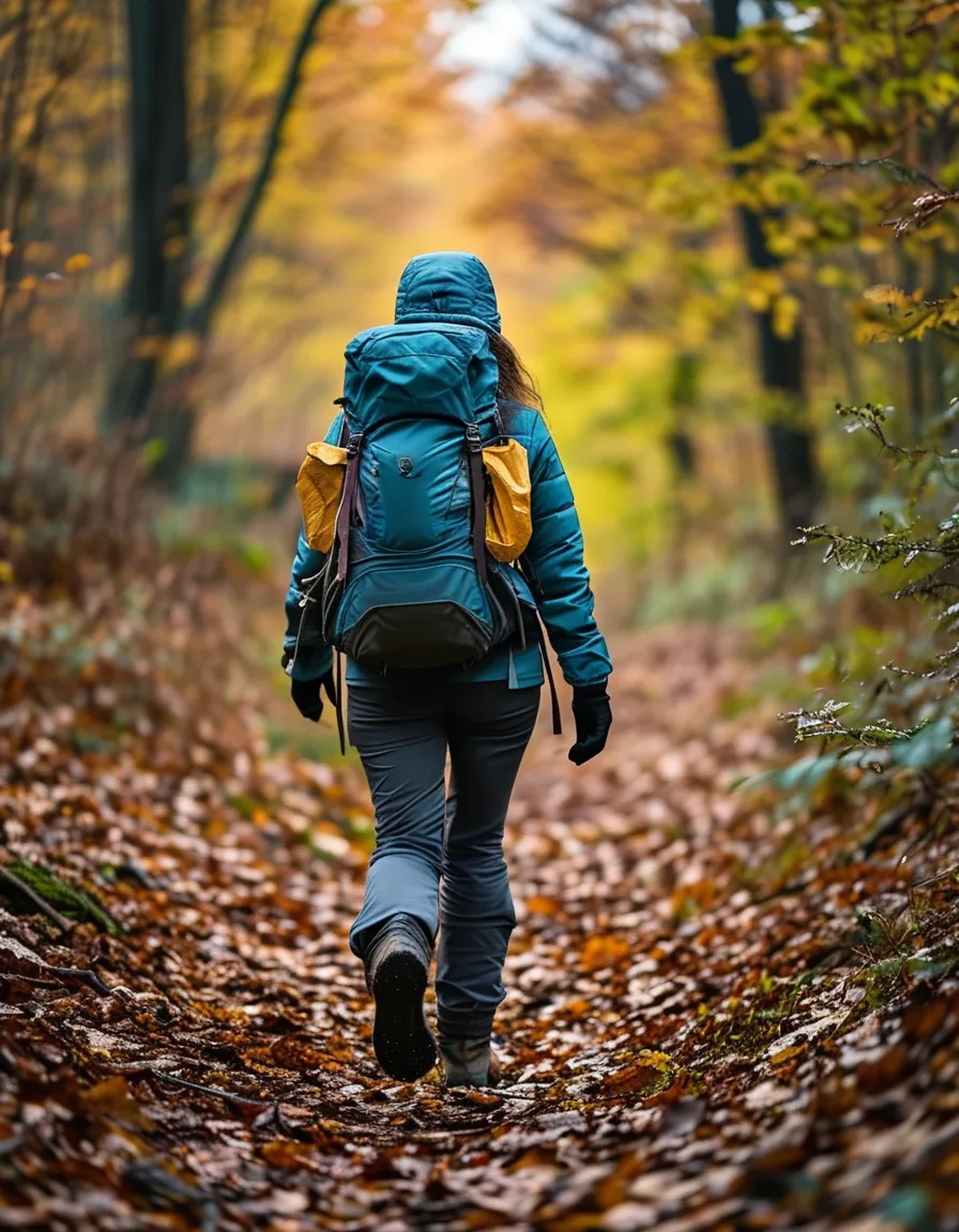
Wet leaves over rock or root are among the most slippery surfaces in hiking, and they are the leading cause of autumn trail falls.
Leaves also hide what is underneath - holes, roots, loose stone, and the actual edge of the path.
Mud arrives and stays as the ground stops drying between rainfalls, which changes both grip and pace.
Stream crossings that were trivial in summer become genuine obstacles after autumn rain, and water levels can rise fast.
Descents are where autumn falls happen, because that is where speed, gravity and reduced grip combine.
Trekking poles are worth far more in autumn than in summer, adding two points of contact exactly where the surface is least reliable.
Footwear grip matters more than footwear stiffness now, so check whether your outsole lugs are worn smooth before the season rather than during it.
And slow the descent deliberately - autumn walking times should be planned slower than summer ones on the same route, and the descent is where most of that difference lives.
Frost and ice appear on high ground well before they appear at valley level, and a shaded north-facing section can hold ice all day in late autumn.
Grass on a slope is more slippery than it looks once wet, and it is where a surprising number of falls happen on descent.
Check the ground conditions in recent trip reports rather than relying on how the route was in summer, since conditions change week to week in autumn.
What Nobody Tells You About Autumn Hiking
Your phone battery drains dramatically faster in the cold, and a phone used for navigation can die hours earlier than expected on a cold day. Carry a power bank and keep the phone warm against your body rather than in an outside pocket.
A phone is not a navigation plan. A paper map and the ability to use it is what makes the phone a convenience rather than a single point of failure.
Weather changes faster in autumn than in summer, and mountain forecasts are more likely to be wrong in the direction that matters.
Mist and low cloud arrive quickly and remove all your landmarks, which is when navigation moves from easy to serious - and it happens far more often in autumn.
You drink less when it is cold and still lose fluid, so autumn dehydration is common and is often mistaken for tiredness.
Eat more than you would in summer. Staying warm costs energy, and running out of food on a cold day gets unpleasant much faster than on a warm one.
Fewer people are on the trails, which is part of the appeal and also means less chance of someone finding you if something goes wrong. Tell someone your route and expected return time - genuinely, not vaguely.
Phone signal is unchanged but your ability to wait for help is not, since waiting in autumn conditions is far more serious than waiting in July.
And the deer rut and other seasonal wildlife activity change behaviour in some regions, so check local guidance where relevant and keep dogs under close control.
What should actually be in the pack?
A head torch with fresh batteries, on every walk, no exceptions.
A wind and waterproof shell, even on a clear forecast, since autumn forecasts change.
A spare warm layer kept dry in the pack, in addition to what you are wearing.
Hat and gloves, which weigh almost nothing and solve the most common discomfort.
A paper map and compass plus the skill to use them, backing up whatever is on your phone.
A power bank, since cold shortens phone battery life substantially.
More food than you think, and a hot drink in a flask, which is worth a surprising amount on a cold summit.
A small first aid kit and a foil blanket, which cover the scenario where you are stopped and cooling.
And trekking poles, which do more for autumn safety than any other single item after the head torch.
A whistle, which weighs nothing and carries far further than a shout.
A spare pair of socks and thin liner gloves, both of which fix a specific, common and disproportionately miserable problem.
And a small dry bag for your spare layer, because a warm layer that got wet in the pack is no longer a warm layer.
How do you plan an autumn route sensibly?
Start earlier than feels necessary, since morning light is the reliable part of an autumn day and evening light is not.
Choose routes with escape options - a road, a lower path, a shorter loop - so that a change of weather does not commit you to the full distance.
Reduce the distance rather than the ambition. A shorter route walked properly in autumn conditions is a better day than a summer-length route finished in the dark.
Check the mountain or upland forecast rather than the town one, because the difference between them in autumn is large.
Check sunset time specifically for the date, since it moves quickly across the season and last month’s number is wrong.
Leave your route and expected return time with someone, and contact them when you are back.
Know the emergency number and procedure for the area you are in, and carry a whistle.
Check whether facilities close for the season - car parks, cafes, public transport and mountain services often reduce hours in autumn, and a locked car park changes a plan late in the day.
Note where the phone signal is on your route rather than assuming, so you know where you would have to walk to in order to call for help.
And be willing to turn around. The summit will be there in spring, and the decision to descend early is the one experienced hikers make routinely and inexperienced ones treat as failure. This is general information, not a substitute for qualified mountain training or local guidance.
FAQ: Autumn Hiking, Answered
What is the biggest autumn hiking mistake?
Planning by distance rather than by sunset. Days shorten by minutes every week and woodland goes dark well before the official sunset.
Do I really need a head torch on a short walk?
Yes, every walk. It weighs almost nothing and it is the difference between an inconvenience and an emergency.
How should I layer for autumn?
Moisture-moving base, insulating mid, wind and waterproof shell - adjusted continuously, never cotton next to skin, plus a spare warm layer kept dry.
Why are wet leaves so dangerous?
They are extremely slippery over rock and root and they hide holes, loose stone and the path edge. Most autumn falls happen on descents.
Are trekking poles worth it?
In autumn, more than any other season - two extra contact points exactly where grip is least reliable.
Why does my phone die so fast on cold walks?
Cold reduces battery performance substantially. Carry a power bank, keep the phone warm against your body, and never rely on it as your only navigation.
How much should I reduce my usual distance?
Plan slower than summer on the same route, especially on descents, and choose shorter routes with escape options. This is general information, not a substitute for qualified mountain training.
TL;DR:
- Plan backwards from sunset with an hour of buffer, and carry a head torch on every autumn walk without exception.
- Layer for the widest point of the range, never wear cotton next to skin, and carry a spare warm layer you do not expect to use.
- Wet leaves over rock and root cause most autumn falls and hide what is underneath - slow the descent and use poles.
- Cold drains phone batteries fast, so carry a power bank and a paper map, and never let the phone be your only navigation.
- Choose shorter routes with escape options, leave your plan with someone, and be willing to turn around.
Autumn is the best hiking of the year with the thinnest margins. Plan for the margins and enjoy the walking. This is general information, not a substitute for qualified mountain training or local guidance.
Keep Reading
This article is for general informational and styling purposes only. Fit, sizing, and product availability may vary — check current details before purchasing.