10 Hiking Essentials Every Woman Should Pack (Beginner Checklist)
There are two ways to learn what to pack for a hike. You can read a checklist, or you can run out of water three miles up a hot mountain and never make that mistake again.
Let’s go with the checklist. It hurts considerably less.
Quick Answer: Ten items cover a day hike: water (more than you think — roughly 500ml per hour), non-cotton layers, a packable rain/wind jacket, real hiking shoes, snacks, sunscreen and a hat, a small first-aid kit with blister plasters, a charged phone with an offline map, a comfortable daypack, and bug spray. If you forget everything else, never skip the golden trio: water, proper shoes, and a weather layer.
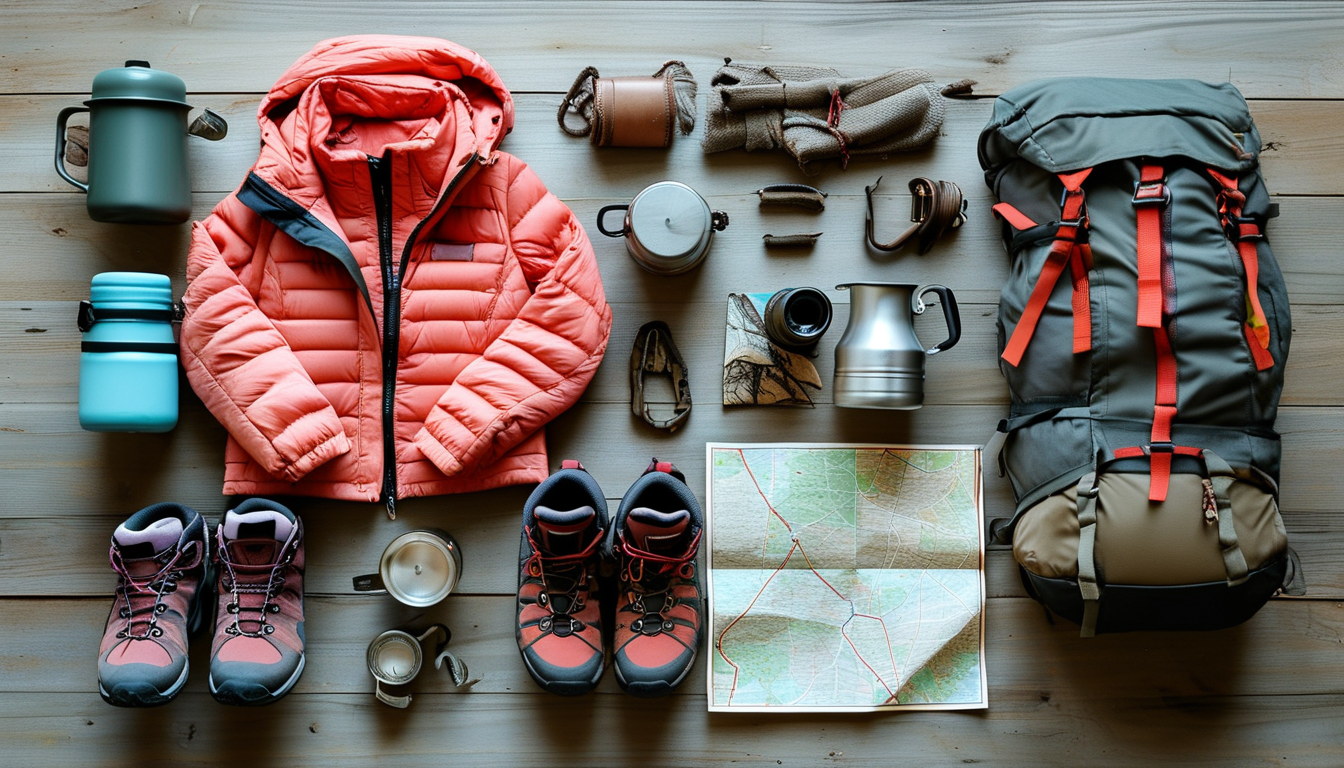
What Should You Pack for a Day Hike?
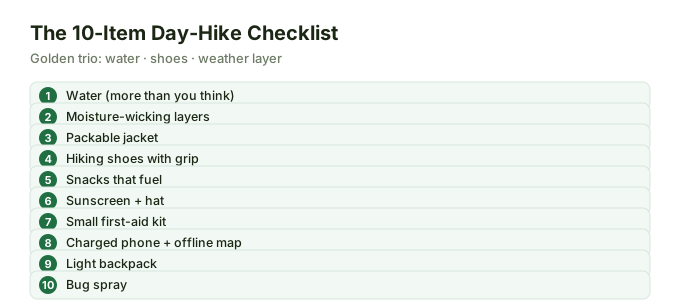
1. Water — more than you think. The most forgotten item and the most consequential. A reasonable planning figure is about 500ml (half a liter) per hour of hiking, more in heat or on steep terrain. For a four-hour hike, that’s 2 liters minimum. Water is heavy and you will still be glad you brought it.
2. Moisture-wicking layers. Hiking leggings or hiking pants plus a non-cotton base layer. Cotton is the actual mistake here — it soaks up sweat, stays wet, chafes, and turns genuinely dangerous when temperatures drop. Synthetic or merino.
3. A packable jacket. Wind and rain shell, stuffed in the pack whether or not the forecast mentions it. Mountain weather changes its mind on a schedule that has nothing to do with your weather app, and temperature drops meaningfully with elevation.
4. Real hiking shoes or boots. Grip and ankle support. Trail runners are fine for groomed trails; boots earn their weight on rock and uneven ground. The one thing that isn’t negotiable is tread — smooth-soled sneakers on a wet descent are how people get hurt.
5. Snacks with staying power. Nuts, bars, dried fruit, jerky. A mix of quick carbs and something with fat and protein. Bring more than you plan to eat.
6. Sunscreen and a hat. You’re at altitude, often exposed, and frequently out for hours. UV increases with elevation and reflects off rock and water. Apply before you start and reapply every two hours — the “I’ll be fine, it’s cloudy” hike is where people get burned worst.
7. A small first-aid kit. Blister plasters above all, plus adhesive bandages, antiseptic wipes, pain relief, tweezers (splinters and ticks), and any personal medication. Blisters are far and away the most common thing that ruins a day hike, and treating a hot spot early takes thirty seconds.
8. A charged phone with an offline map. Download the map before you leave — cell service is the thing you cannot count on, and a navigation app that needs data is useless exactly where you need it. A power bank is worth its weight; cold and constant signal-searching drain batteries fast.
9. A comfortable daypack. 15–25 liters for a day hike, with padded straps and ideally a hip belt that transfers weight off your shoulders.
10. Bug spray. The difference between a nice hike and a scratchy one — and in tick country, a genuine safety item.
How Should You Pack Your Bag?
A few rules so the pack doesn’t punish you:
- Heaviest items close to your back, centered between your shoulder blades. This keeps the load over your center of gravity instead of pulling you backward.
- Water and snacks within easy reach — side pockets or hip belt pockets. You’ll grab these repeatedly, and a pack you have to take off every time is a pack you’ll stop drinking from.
- Layers on top so you can add or shed without unpacking everything.
- Rain jacket somewhere immediate. Buried at the bottom is where rain jackets go to be useless.
- Use the hip belt. A properly worn hip belt puts most of the weight on your hips rather than your shoulders, and a lot of people never tighten it.
The Golden Trio
If you genuinely forget everything else, these three are the ones that determine whether a bad day is recoverable:
Water. Proper shoes. A weather layer.
Everything else on the list is comfort, convenience, or contingency. These three are the ones whose absence turns an easy trail into a real problem — dehydration, an injury from poor footing, or getting cold and wet with no way to warm up.
5 Mistakes Everyone Makes on Their First Few Hikes
1. Bringing too little water and too much everything else. The classic new-hiker pack is heavy with things they won’t touch and light on the one thing they’ll want every twenty minutes. Water first, then decide what else fits.
2. Wearing cotton. Cotton socks are the leading cause of blisters, and a cotton tee is genuinely dangerous in cold, wet conditions because wet cotton actively pulls heat out of you. Synthetic or wool socks matter as much as the shoes.
3. Brand-new boots. Never wear unbroken-in boots on a real hike. Wear them around the house and on short walks for a week or two first, or accept that you’re going to learn about blisters experientially.
4. Not telling anyone where you’re going. Free, takes ten seconds, and matters enormously if something goes wrong. Text someone your trail and your expected return time.
5. Ignoring a hot spot. That small warm rubbing feeling in your shoe is a blister announcing itself in advance. Stop, take the shoe off, and put a plaster on it now. Two minutes then saves you three miles of limping — and the mistake almost everyone makes once is deciding to deal with it at the top.
FAQ
How much water should you bring on a day hike?
Roughly 500ml per hour as a baseline, so about 2 liters for a four-hour hike — and more in hot weather, at altitude, or on steep terrain. If you’re hiking somewhere hot or the route is longer than a few hours, consider a filter or purification tablets as backup so you can refill from a water source.
Do you need hiking boots or will sneakers work?
On flat, groomed, dry trails, trail runners or sturdy sneakers are fine and many hikers prefer them for the lighter weight. Boots become worth it on rocky, uneven, wet, or steep terrain where ankle support and aggressive tread matter. What doesn’t work in any conditions is a smooth-soled fashion sneaker.
What’s the most commonly forgotten hiking essential?
Enough water, by a wide margin — people routinely bring half of what they need. After that: a rain layer when the forecast looks clear, and blister plasters. All three share the same failure mode: they feel unnecessary at the trailhead and become the only thing you’re thinking about two hours in.
TL;DR:
- Ten items: water, non-cotton layers, packable jacket, real hiking shoes, snacks, sunscreen and hat, first-aid kit, phone with offline map, daypack, bug spray.
- Water: ~500ml per hour. The most-forgotten and most-consequential item.
- Golden trio if you forget everything else: water, shoes, weather layer.
- Cotton is the real mistake — socks especially. Synthetic or merino only.
- Download your map offline. Cell service is exactly what you can’t count on.
- Pack heavy items close to your back, water and snacks reachable, rain jacket on top.
- Treat hot spots immediately — a blister announces itself before it forms.
- Tell someone your route and expected return time. Free, ten seconds, matters a lot.
Keep Reading
This article is for general informational and styling purposes only. Fit, sizing, and product availability may vary — check current details before purchasing.