Hiking for Beginners: How to Get Started
Quick Answer: Start hiking with a well-marked trail of 2–3 miles and under 500 feet of elevation gain, shoes with real tread, about half a liter of water per hour, a snack, a layer, sun protection and a charged phone. Check the forecast, tell someone your route and return time, and walk at a pace where you can still hold a conversation. That’s genuinely the whole entry requirement — no peak, no fitness prerequisite, no expensive kit.
Hiking has an unfortunate PR problem. The photos are all summits, technical packs and people who own trekking poles.
The actual activity is: walking, outside, on a path. If you can walk your neighborhood for an hour, you can hike — the only thing standing between you and a trailhead is knowing which five things to bring.
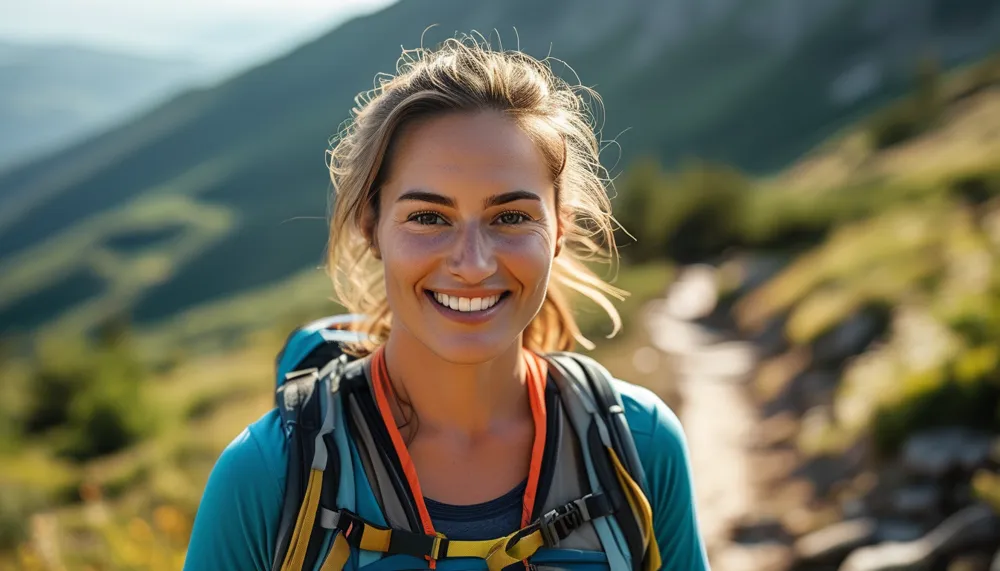
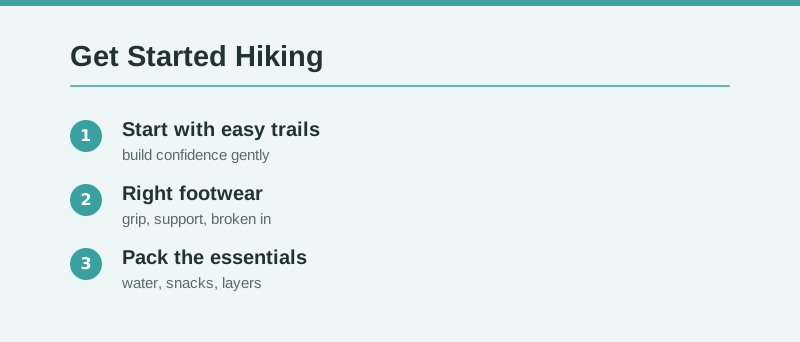
What’s a good first hike for a complete beginner?
Look for three numbers on the trail listing: 2–3 miles round trip, under 500 feet of elevation gain, rated easy. That’s roughly 60–90 minutes of walking with enough climbing to feel like a hike and not enough to end your enthusiasm.
Where to find them: AllTrails and Gaia GPS both filter by distance and difficulty, and your state park or county park system usually lists beginner loops with parking and restroom information — which matters more on day one than scenery does.
Choose a loop over an out-and-back if you can, so the return is new instead of familiar. Choose a popular trail over a remote one for the first few outings; other hikers on the path are a genuine safety feature.
Then build from there. A reasonable ladder: 3 miles flat → 4 miles rolling → 5 miles with 1,000 feet of gain. Add distance or climbing, not both at once. Most people who quit hiking quit because their second hike was four times harder than their first.
Rough time math: plan about 30 minutes per mile, plus 30 extra minutes for every 1,000 feet of climbing, plus stops. That estimate keeps you off the trail after dark, which is the mistake that turns a nice afternoon into a stressful one.
What should beginners wear for hiking?
Footwear is the one thing worth getting right. Trail runners or hiking shoes with real lugged tread — grip on loose dirt and gravel is what prevents the slip that ends a hike. You don’t need $200 boots; you do need something designed for trails rather than for the gym. Break them in on two or three neighborhood walks first, because a trail is a poor place to discover a hot spot.
Socks are the surprise second priority. Wool or synthetic, never cotton. Cotton holds moisture against your skin, and moisture is what makes blisters.
Clothes: anything that moves and dries. Leggings, hiking pants or shorts, a technical or merino top. The one rule is no cotton next to skin on anything longer than a couple of miles.
Layers — because trail temperature swings more than you expect between a shaded creek bottom and an exposed ridge. A light wind or rain shell packs to nothing and turns a bad forecast into a non-event.
In late summer, add sun to the list of things you dress against: a brimmed hat, sunglasses, and a long-sleeve sun shirt beat sunscreen alone on exposed trails.
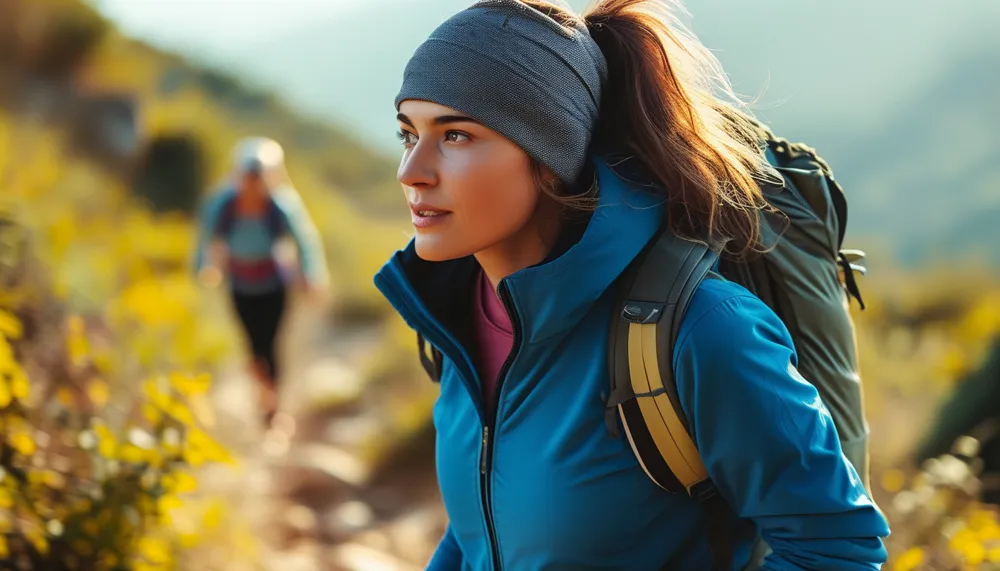
What should you pack for a day hike?
Even a two-mile walk earns a small pack. The beginner list:
- Water — about 0.5 liters per hour, more in heat. For an August hike, err high; running out is the single most common beginner problem.
- Snacks — something salty and something sweet. Trail mix, a bar, fruit. 200–300 calories per hour of walking is plenty.
- A layer — light fleece or shell, even if the forecast is perfect.
- Sun protection — sunscreen, hat, sunglasses, lip balm.
- A charged phone with the map downloaded for offline use. Cell service disappears in valleys. A screenshot is not a map.
- A tiny first-aid kit — blister plasters especially, plus a couple of adhesive bandages and pain relief.
- A headlamp once your hikes get long enough to risk finishing near dusk.
That entire kit fits in a 15–20 liter daypack and weighs a few pounds. You do not need trekking poles, a hydration bladder, or technical anything to begin.
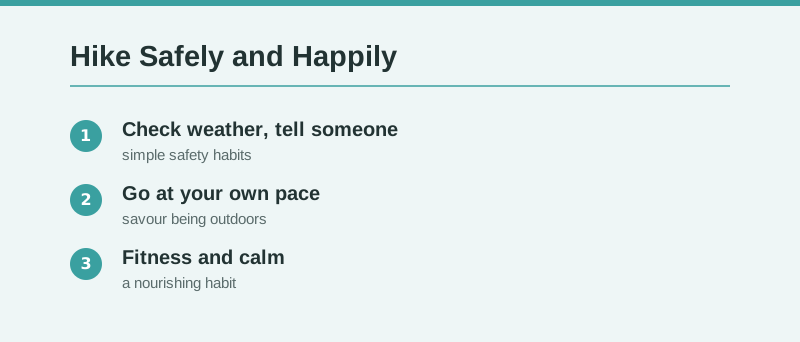
What safety basics actually matter?
Two habits, thirty seconds each, and they cover most of what goes wrong.
Check the forecast — and check it for the trail, not your house. Mountain and canyon weather changes fast, and elevation can mean 15°F cooler and considerably windier than the parking lot. In summer, watch for afternoon thunderstorms and plan to be off exposed ridges by early afternoon. In heat, start early: a 7am departure is a different hike than a 1pm one.
Tell someone where you’re going and when you’ll be back. Trail name, parking area, expected return time. Send it as a text so there’s a record. This costs nothing and is the difference between a delay and an emergency.
Two more worth internalizing: stay on marked trails (most lost-hiker incidents start with a shortcut), and turn around if anything feels wrong — weather, footing, energy, or time. The trail will still be there next weekend.
What Nobody Tells You About Your First Hikes
- Downhill is harder than uphill. Uphill taxes your lungs; downhill taxes your quads and knees, and it’s what makes you sore two days later. Shorten your stride and take it slower than feels necessary.
- You’ll drink more than you think and eat less than you think. Plan water generously; snacks can be modest.
- Everyone stops. Nobody on the trail is judging your pace — stopping to breathe on a climb is what hiking looks like from the inside.
- Bugs, sun and mud are the actual difficulties, not terrain. Repellent and a hat solve more first-hike misery than fitness does.
- You’ll need to plan for a bathroom. Check whether the trailhead has one, because many don’t, and this is the detail nobody puts in the guide.
- The mental part arrives faster than the fitness part. Most people notice the head-clearing effect on hike one and the leg strength around hike five.
Mini FAQ
Do I need to be fit to start hiking?
No. If you can walk for an hour on flat ground, you can do a beginner trail — you’ll just go slower on the climbs, which is fine. Fitness builds remarkably fast with hiking because you’re outdoors and distracted; people routinely double their comfortable distance within a month or two.
How long should my first hike be?
Two to three miles, taking 60–90 minutes. It’s long enough to feel like a real outing and short enough that a wrong turn, bad shoes or unexpected heat doesn’t become a problem. If it felt easy, add a mile next time — not four.
Is it safe to hike alone as a beginner?
It can be, with sensible precautions: pick a popular, well-marked trail, go during daylight, share your route and return time with someone, download the offline map, and keep your phone charged. Many people find solo hiking is the best part of it. Save quiet or remote trails for after you’ve built some experience.
TL;DR:
- First hike: 2–3 miles, under 500 ft of gain, well-marked and popular.
- Shoes with real tread + wool or synthetic socks — no cotton.
- Pack: 0.5 L water/hour, snacks, a layer, sun protection, offline map, blister plasters.
- Plan 30 min per mile plus 30 min per 1,000 ft of climbing.
- Check the forecast for the trail; text someone your route and return time.
- Walk at conversation pace, take the downhills slowly, add distance or climbing — never both.
Start easy, keep it comfortable, and let the trail do what it does.
Keep Reading
This article is for general informational and styling purposes only. Fit, sizing, and product availability may vary — check current details before purchasing.