Why Your Hands Cramp on Long Hikes Even When Using Trekking Poles
Hand cramping on a long hike with trekking poles gets blamed on the poles themselves, or on general fatigue setting in. But most of that strain comes from gripping the handle tightly the entire hike instead of letting the wrist strap bear the load, a technique gap that turns a support tool into an extra workout for the hands.

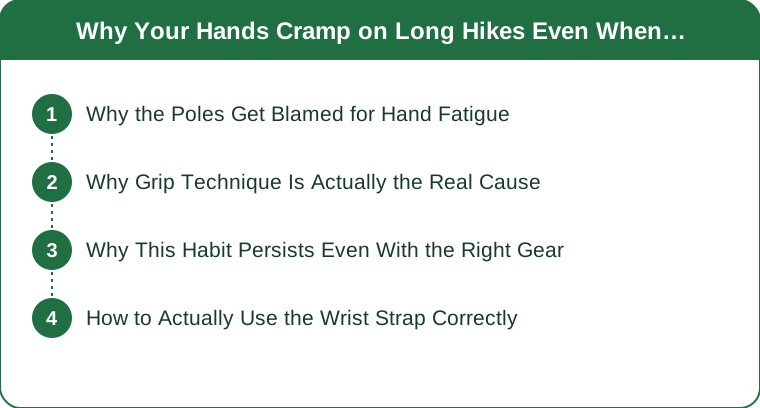
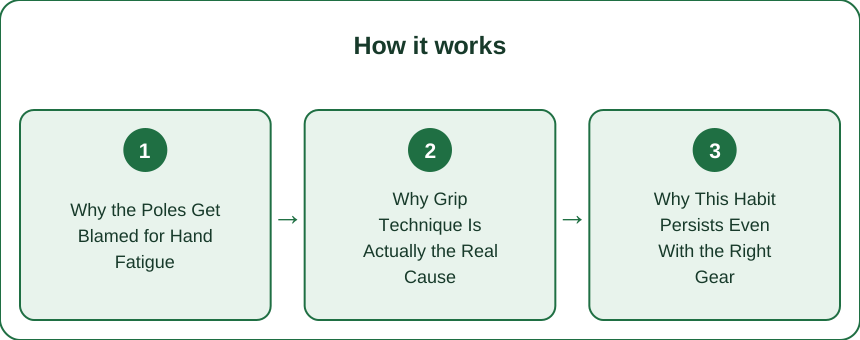
Why the Poles Get Blamed for Hand Fatigue
The direct-contact assumption: hands being in constant contact with the pole grips for the entire hike, so any cramping or soreness naturally gets attributed to the poles or the hike’s overall length and intensity.
Why Grip Technique Is Actually the Real Cause
The mechanical fix most people skip: trekking poles are designed with a wrist strap meant to bear the pushing load, letting the hand rest in a relaxed, open grip against the strap rather than clenching the handle, but most hikers grip the handle tightly out of habit, turning every pole plant into a small isometric hand contraction repeated thousands of times over a hike.

Why This Habit Persists Even With the Right Gear
The overlap: a properly fitted wrist strap being present on nearly every trekking pole sold, which makes it easy to assume the gear itself will handle load distribution automatically, without realizing the hand still has to actively relax into the strap rather than grip the handle.
How to Actually Use the Wrist Strap Correctly
The practical adjustment: threading the hand up through the strap from underneath so it sits across the palm, then keeping fingers loose around the handle and letting the strap, not the grip, absorb the pushing force with each stride, and the frame (gripping the handle tightly instead of using the wrist strap is what causes hand cramping — relaxing into the strap is what actually saves the hands on a long hike.)
Hand cramping on a long hike with trekking poles gets blamed on the poles themselves, but most of that strain comes from gripping the handle tightly the entire hike instead of letting the wrist strap bear the load. Poles are designed with a strap meant to carry the pushing force while the hand stays relaxed and open, but most hikers grip out of habit, turning every pole plant into a small hand contraction repeated thousands of times. Threading the hand up through the strap from underneath and keeping fingers loose around the handle is what actually saves the hands on a long trail.
Keep Reading
This article is for general informational and styling purposes only. Fit, sizing, and product availability may vary — check current details before purchasing.