The Shoulder-Season Layering System That Actually Works on Cold-Morning, Warm-Afternoon Hikes
Quick Answer: Shoulder-season hikes need a layering system built around removal speed, not just warmth — a moisture-wicking base, a light insulating mid-layer, and a packable wind or rain shell, each chosen so it can come off in under 30 seconds without stopping the hike entirely. Overdressing for the cold start and underestimating the afternoon swing is the single most common shoulder-season mistake.
The trailhead thermometer reads 44°F and your breath is visible. Three hours and 1,200 feet of climbing later, you’re sweating through a base layer under a jacket you can’t easily take off without stopping to dig through your pack — and that mismatch, more than any single gear failure, is what actually ruins shoulder-season hikes.
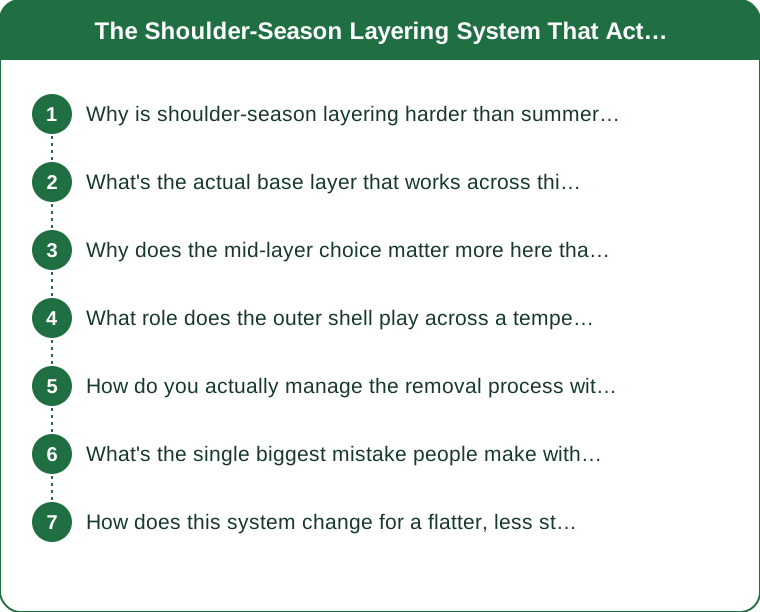
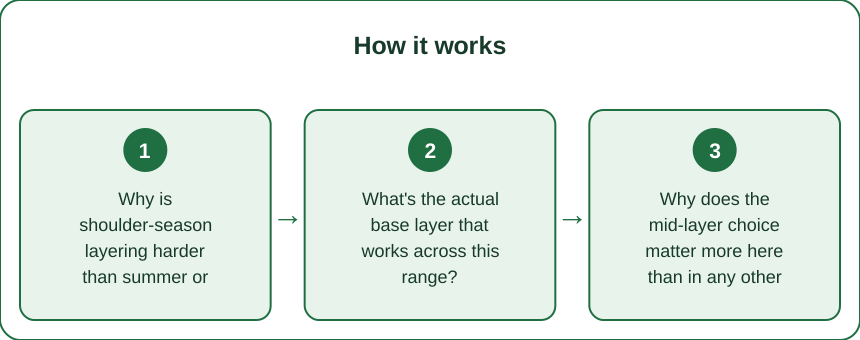
Why is shoulder-season layering harder than summer or deep winter?
Summer hiking is a solved problem — dress light, hydrate, done. Deep winter is also relatively simple — you dress for cold and stay dressed for cold the whole hike. Shoulder season is uniquely hard because the temperature swing across a single hike can be 25-30 degrees, meaning the system has to actively adapt mid-trail rather than being set once at the trailhead.
The common mistake is applying either a summer or winter mindset to a hike that’s actually neither — dressing for the 44°F start and then being miserable and soaked in sweat by the 70°F midday climb.
What’s the actual base layer that works across this range?
A moisture-wicking synthetic or merino base layer, never cotton, is non-negotiable for shoulder season specifically — cotton that gets damp from morning cold-sweat or condensation stays wet and cold for the rest of the hike, actively working against you once temperatures rise and you need that layer to help regulate rather than trap moisture.
Merino has the advantage of resisting odor better across a long, temperature-variable day, while synthetic dries slightly faster if it gets properly soaked — either works, cotton doesn’t.
Why does the mid-layer choice matter more here than in any other season?
A mid-layer for shoulder season needs to be genuinely quick to remove and pack down small — a bulky fleece that takes real effort to stuff into a pack becomes a layer you keep wearing past the point it’s useful, just to avoid the hassle of dealing with it.
A lightweight synthetic-insulated jacket that compresses into its own pocket, or a simple quarter-zip fleece, solves this better than a heavier, warmer piece that’s harder to manage mid-trail. The goal is a layer you’ll actually remove at the right moment, not just the warmest option on paper.

What role does the outer shell play across a temperature swing?
A packable wind or light rain shell handles the unpredictable part of shoulder season — sudden wind at a ridge line, a passing shower, or just the last bit of chill before the sun fully takes over. It should live at the very top of your pack, not buried, since shoulder-season weather changes fast enough that digging for it costs real comfort.
This shell isn’t your main warmth layer — it’s a wind and moisture barrier that works over whatever combination of base and mid-layer you’re currently wearing.
How do you actually manage the removal process without stopping the hike?
Build in a genuine 5-minute stop at the first sign of overheating, rather than pushing through discomfort to avoid interrupting momentum. Trying to strip a layer while still moving on uneven terrain is how gear ends up dropped or half-stuffed into a pack incorrectly.
Most experienced shoulder-season hikers treat the first layer change as a planned, expected stop — not a sign the system failed — roughly 30-45 minutes into a climb, once body heat has fully built up.
What’s the single biggest mistake people make with shoulder-season layering?
Overdressing at the trailhead based on how cold it feels standing still. Your body generates significant heat within the first 15-20 minutes of climbing, and the temperature that felt right standing at the car will feel overdressed by the first switchback. Dress slightly cold for the first five minutes on purpose — if you’re comfortable standing at the trailhead, you’re overdressed for the climb ahead.
How does this system change for a flatter, less strenuous shoulder-season hike?
Flat terrain generates less internal heat, so the temperature swing across the hike is smaller and layer changes are less urgent — but the same base-mid-shell logic still applies, just with a longer window before the first layer change becomes necessary. The core mistake to avoid is the same: don’t judge your layering by how you feel standing still at the start.
TL;DR:
- Shoulder-season hikes can swing 25-30 degrees across a single trip, requiring a system built for mid-hike changes
- Moisture-wicking base layers (never cotton) matter more here than in any other season
- Choose a mid-layer that’s genuinely quick to remove and pack small, not just the warmest option
- Keep a packable shell at the top of your pack for fast access
- Dress slightly cold at the trailhead on purpose — body heat builds fast within the first climb
The right shoulder-season system isn’t about picking warmer or lighter gear — it’s about building in the removal speed the temperature swing actually demands.
Keep Reading
This article is for general informational and styling purposes only. Fit, sizing, and product availability may vary — check current details before purchasing.