How Much Water Should You Actually Carry on a Day Hike?
Quick Answer: Carry roughly half a liter per hour of moderate hiking in mild weather, closer to 1 liter per hour in heat above 85°F or on steep terrain. For a standard 3-hour hike, that’s 1.5 to 3 liters.
You’ve either finished a hike with three-quarters of a full bottle still sloshing around, or you’ve hit mile 5 completely dry with switchbacks still ahead. Both mean the math was off before you left the car. The right amount depends on more than just distance.
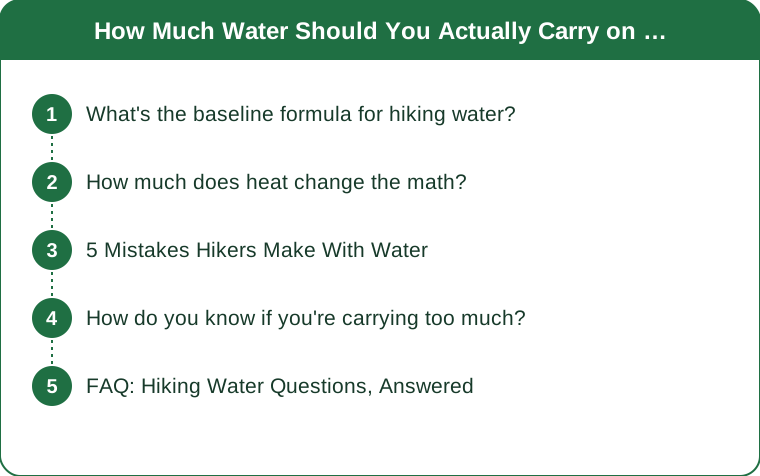
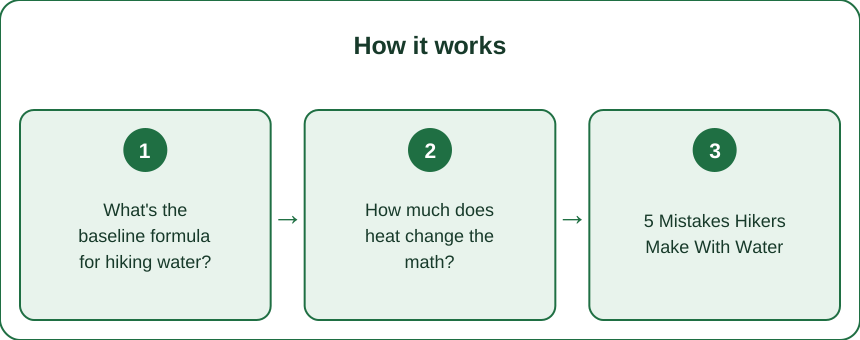
What’s the baseline formula for hiking water?
Start with half a liter (about 17 oz) per hour of hiking at a moderate pace in comfortable temperatures. A 3-hour hike lands around 1.5 liters, a 5-hour hike around 2.5 liters.
This is a floor, not a ceiling — three other factors push that number up fast: heat, elevation gain, and how much you sweat compared to the average hiker.
How much does heat change the math?
A lot. Above 85°F, bump your hourly rate to close to 1 liter. Your body loses far more through sweat just standing still in heat, before you’ve climbed a single foot of elevation.
Dry, high-altitude heat is sneakier than humid heat — sweat evaporates so fast you don’t feel wet, so you underestimate how much you’re actually losing. Set a sip reminder every 15-20 minutes in dry heat instead of waiting to feel thirsty.
5 Mistakes Hikers Make With Water
1. Judging need by thirst. Thirst lags dehydration by 20-30 minutes — by the time you feel it, you’re already behind.
2. Front-loading before the trailhead. Chugging a liter in the parking lot mostly just means an early bathroom break, not real hydration reserve.
3. Ignoring elevation gain. A steep 3-mile climb burns more water than a flat 6-mile walk — go by effort, not just distance.
4. No electrolytes on long hikes. Past 2 hours in heat, plain water without any sodium can actually leave you feeling worse, not better.
5. One big bottle, no backup plan. If it leaks or you drop it, you have zero water left. Split your total across two containers.
How do you know if you’re carrying too much?
If you regularly finish hikes with more than a third of your water untouched, you’re likely over-carrying for that route and season. Extra water is dead weight — literally about 2.2 lbs per liter.
Dial it back gradually: drop 0.5 liters on your next similar hike and see how you feel at the finish. Adjust from there rather than guessing from scratch each time.
FAQ: Hiking Water Questions, Answered
Should I carry more water than the formula says just to be safe?
A little buffer (10-15%) is smart for an unfamiliar trail, but doubling your amount just adds unnecessary pack weight. Know the route and adjust from real experience.
Is tap water fine, or do I need a filter?
For day hikes with no natural water sources, tap or filtered water from home is fine. Only worry about filtration if you’re planning to refill from a stream.
How much water for a hike with a dog?
Plan for your dog to need roughly as much as you do per hour in similar heat — bring a collapsible bowl and don’t assume they’ll find water on trail.
TL;DR:
- Baseline: 0.5L per hour moderate pace, up to 1L per hour above 85°F
- Thirst lags dehydration by 20-30 minutes — don’t wait for it
- Elevation gain matters more than raw mileage
- Consistently finishing with a third left over means you can carry less next time
Start with the formula, track how much you actually drink, and let real data — not guesswork — set your number for next time.
Keep Reading
This article is for general informational and styling purposes only. Fit, sizing, and product availability may vary — check current details before purchasing.