The Complete Guide to Hiking With Your Dog: Gear, Pacing, and Safety Nobody Tells You
Quick Answer: Hiking with a dog means planning around your dog’s pace and water needs first, not your own — bring roughly twice the water you’d normally pack, check paw pads on rocky terrain, and build up trail distance gradually just like you would your own training.
Your dog’s enthusiasm at the trailhead doesn’t tell you much about mile 6. Planning a dog hike well means thinking about a hiking partner who can’t tell you when something’s wrong.

Is your dog actually ready for the trail you’re planning?
Fitness readiness for dogs works a lot like it does for people: build gradually. A dog that’s mostly done neighborhood walks isn’t automatically ready for an 8-mile trail with elevation gain, even if their energy at the trailhead suggests otherwise.
Start with trails under 3 miles and moderate elevation, then increase distance roughly 10-20% per outing over a few weeks, watching recovery time afterward rather than just enthusiasm during. A dog that’s stiff or unusually tired the next day needs a slower ramp-up, same as you would.
Breed and age matter too — flat-faced breeds (bulldogs, pugs) overheat faster and are poor candidates for hot or high-altitude trails regardless of fitness level, and senior dogs need shorter, flatter routes even if they were trail veterans a few years back.
What gear actually matters for a dog hike?
Water is the single most important item — dogs can’t sweat to cool down the way humans do, and panting alone often isn’t enough on warm or exposed trails. Bring roughly double what you’d carry for yourself, plus a collapsible bowl.
A well-fitted harness (not just a collar) distributes pressure better on uneven terrain and gives you a grab handle for scrambly sections. For rocky, hot, or icy trails, dog boots protect paw pads from cuts and burns — introduce them at home first since most dogs need a few short sessions to walk normally in them.
A basic canine first-aid kit (vet wrap, tweezers for splinters or ticks, styptic powder for a torn nail) weighs almost nothing and covers the most common trail mishaps.
What Nobody Tells You About Pacing a Dog Hike
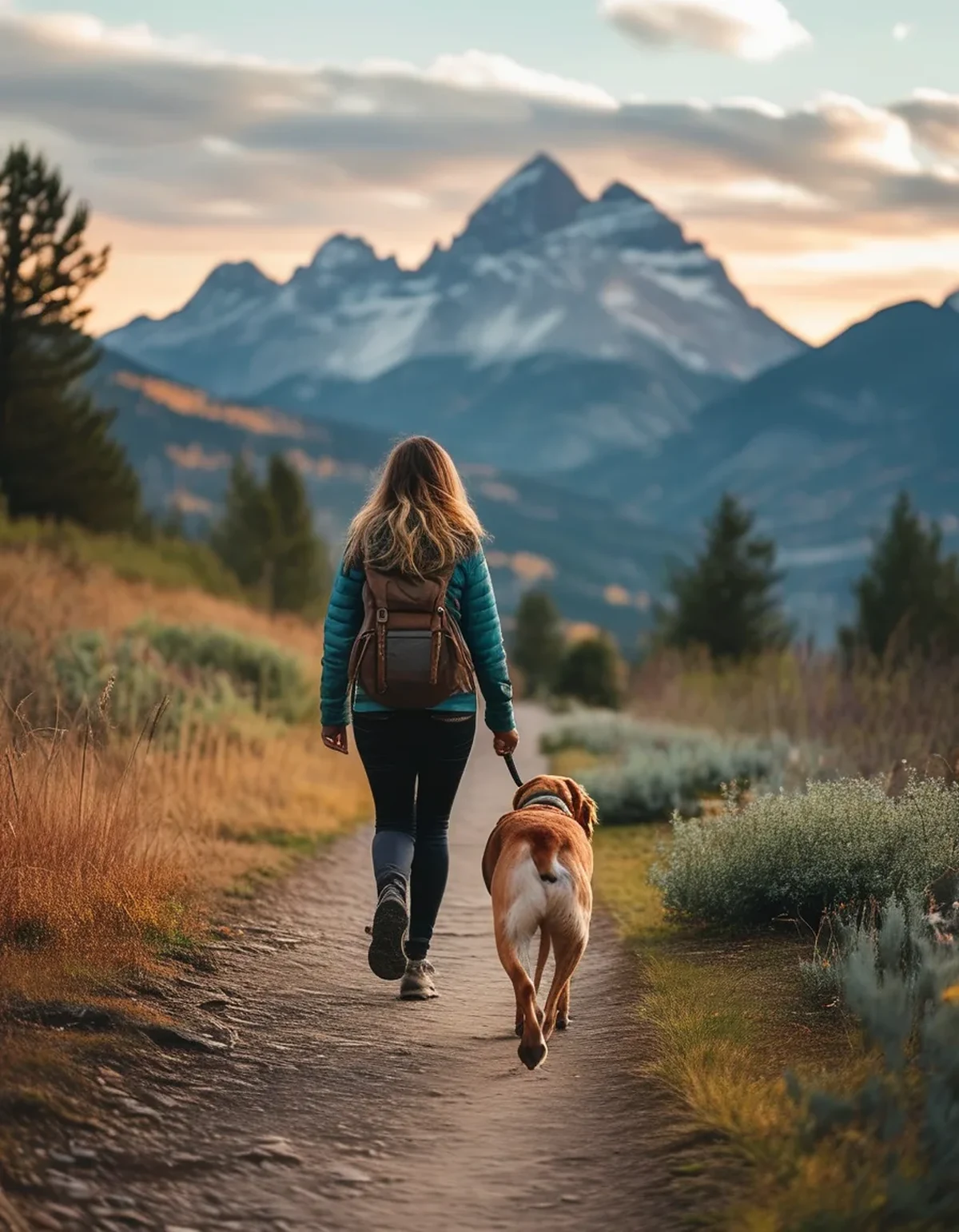
Here’s the part that surprises new dog-hikers most: your dog’s ideal pace is rarely your ideal pace, and matching theirs (not asking them to match yours) prevents most trail problems.
Dogs naturally want to investigate, which means frequent short stops — that’s not slowing you down unnecessarily, it’s often exactly the recovery micro-breaks a working dog body needs on a long trail. Fighting that rhythm to keep your own pace is one of the most common reasons dogs overheat or exhaust themselves without obvious warning signs until it’s sudden.
How do you recognize a dog in trouble on the trail?
Watch for excessive drooling, bright red or pale gums, stumbling, or refusing to keep moving — these signal heat stress or exhaustion and mean stopping immediately, finding shade, and offering small amounts of water rather than pushing to the trailhead.
Limping that appears mid-hike, especially after rocky terrain, usually means a paw check is needed — a lodged rock or small cut is common and easy to miss without stopping to look. If symptoms don’t resolve with rest, treat it as a reason to end the hike early rather than wait and see; a vet visit is the safe call over guessing.
FAQ: Hiking With Your Dog Questions, Answered
How much water does a dog need on a hike?
A rough guide is about half an ounce per pound of body weight per hour of moderate hiking in mild conditions — more in heat, less on cool, shaded trails.
At what temperature is it too hot to hike with a dog?
Many trail-savvy vets suggest caution above 80°F, especially without shade, and avoiding midday heat entirely for flat-faced or heavy-coated breeds.
Should dogs hike on-leash or off-leash?
Most trail systems require leashes by rule, and even where off-leash is allowed, a leash gives you control near wildlife, other hikers, and steep drop-offs — worth defaulting to unless you’re certain of both the rules and your dog’s recall.
TL;DR:
- Build trail distance gradually, watching next-day recovery, not just trailhead energy
- Pack double water, a proper harness, and a basic canine first-aid kit
- Match your dog’s pace and stop rhythm instead of asking them to match yours
- Drooling, pale gums, or sudden limping mean stop and check immediately
A dog-friendly trail plan isn’t a scaled-down version of your own — it’s a genuinely different hike, planned around a partner who can’t say when they’re struggling.
Keep Reading
This article is for general informational and styling purposes only. Fit, sizing, and product availability may vary — check current details before purchasing.