How to Plan Your First Shoulder Season Overnight When Daylight Is Shrinking
Quick Answer: A late-season overnight fails or succeeds on daylight math, not fitness. You lose roughly two to three minutes of usable light per day through September, and the practical loss is larger because low sun disappears behind ridgelines early. Plan your camp arrival for at least ninety minutes before sunset, build the whole itinerary backward from that, and treat every other decision as downstream of it.
You did this route in midsummer and finished with light to spare. The same pace in late September puts you setting up a tent by headlamp in a cold wind, which is how a pleasant trip turns into a grim one.
Nothing about your fitness changed. The day just got shorter at both ends, and the margin you did not know you were using has quietly disappeared.
Why does the daylight math matter more than the mileage?
Because every difficult thing on an overnight trip gets harder in the dark and colder as soon as the sun is off the slope, and the two happen together.
Through September, most temperate latitudes lose somewhere between two and three minutes of daylight per day. Over a month that is well over an hour, which sounds manageable until you account for terrain.
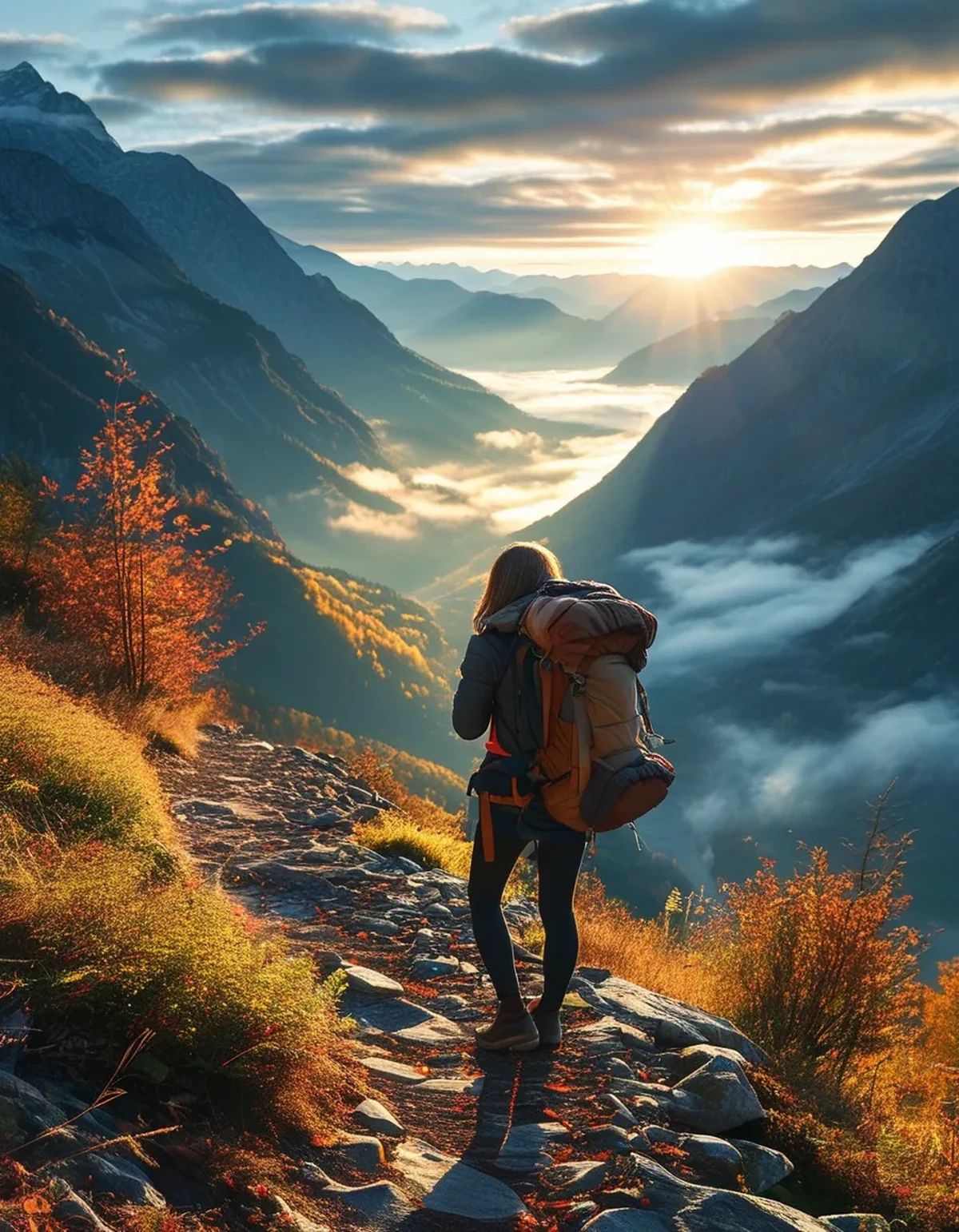
Terrain steals more light than the almanac suggests. A published sunset time is for a flat horizon. In a valley, on a north-facing slope, or under any significant ridgeline, functional daylight ends thirty to sixty minutes earlier. If your campsite is in a drainage - and good campsites usually are, because that is where the water is - you are working with meaningfully less light than your app told you.
Temperature tracks the light, not the clock. The drop as the sun leaves a slope is fast and larger than the day’s forecast range implies. You go from comfortably warm while moving to genuinely cold while stopped, in about fifteen minutes, and that transition is exactly when you are standing still trying to pitch a tent.
Your pace also drops in the second half of a shoulder season day. Cooler air is easier to move in, which helps, but early darkness makes footing harder on descent, and descents late in the day are where most tired-hiker injuries happen.
So the mileage number that worked in July is not wrong, it is just being asked to fit into a smaller container with worse conditions at the end of it. The planning fix is to stop starting from mileage.
How do you build the itinerary backward?
Start with the moment you want to be finished, and work back from there. This is the single most useful change in shoulder season planning.
Fix your camp-ready time first. Aim to have the tent up and water collected at least ninety minutes before sunset, and two hours if it is your first trip of the season or the site is new to you. That buffer is not luxury - it absorbs a wrong turn, a slower partner, a water source that turned out to be dry, and the twenty minutes you always lose to something.
Subtract the camp chores. Pitching, water, filtering, and cooking realistically take forty-five minutes to an hour when you are cold and moving carefully. In midsummer you do these in a t-shirt with light to spare and they feel like ten minutes.
Subtract your actual moving time, not your optimistic one. Take your genuine pace including breaks - for most people carrying an overnight pack on mixed terrain that is somewhere around two miles an hour, less with real elevation. Then add ten percent for the season, because layering stops, colder hands, and more careful footing all cost time.
Now you have your start time, and it is usually earlier than you expected. A shoulder season overnight often wants an early morning start for a distance that felt like a lazy afternoon in July.
Then check the number against sunrise. If your calculated start is before it is light, either the route is too long for the season or you are committing to a headlamp start - which is a legitimate choice, and much better made deliberately at the kitchen table than discovered at four in the afternoon on the trail.
Do this backward pass once and you will notice something uncomfortable: many standard summer overnights simply do not fit into a late September day at the same pace. That is the real finding, and it is better to meet it now than at dusk.
What changes in the pack itself?
Less than people expect in volume, and more than expected in specifics.
The sleep system is where the season actually bites. Nighttime lows in the shoulder season regularly sit well below what a summer bag handles, and the temperature ratings on bags are survival-oriented rather than comfort-oriented. A liner adds meaningful warmth for little weight and is the cheap fix. Ground insulation matters more than most people realize, because cold ground pulls heat far faster than cold air - an insulated pad is not optional once the ground itself is cold.
Two light sources, not one. A headlamp with fresh batteries and a small backup. This sounds paranoid until the first time a single headlamp dies while you are looking for a campsite, and the cost of the backup is a couple of ounces.
A warm layer you have never sweated in. Keep one insulating layer strictly for camp, sealed away and dry. The mistake is wearing your puffy on the climb, arriving damp, and then having nothing dry to put on when you stop.
More calories than the mileage suggests. Staying warm burns energy all night, and shoulder season nights are long. Hikers who eat a summer food plan on an autumn trip often wake up cold and blame the bag.
Water planning changes too. Late-season sources can be lower or dry after a hot summer, and the guidebook was probably written from a spring visit. Check recent trip reports rather than the book, and carry the capacity to be wrong about one source.
And gloves and a hat, always. They weigh almost nothing and they are the difference between being able to manage tent stakes and fumbling helplessly. Cold hands are how small problems become large ones.
What you do not need is a dramatically larger pack. The shoulder season pack is the summer pack with a better sleep system, a dedicated dry warm layer, and a second light.
5 Mistakes on a First Shoulder Season Overnight
1. Planning from last summer’s time on the same route. Your summer time is a real data point about your fitness and a poor one about the season. Add the layering stops, the shorter usable light, and the more careful descent, and the same route is a longer day.
2. Treating the forecast high as the relevant number. The relevant numbers are the overnight low and the wind, and both are usually worse at your campsite than at the valley weather station the forecast comes from. Elevation costs roughly three to five degrees per thousand feet, and exposed sites lose more to wind.
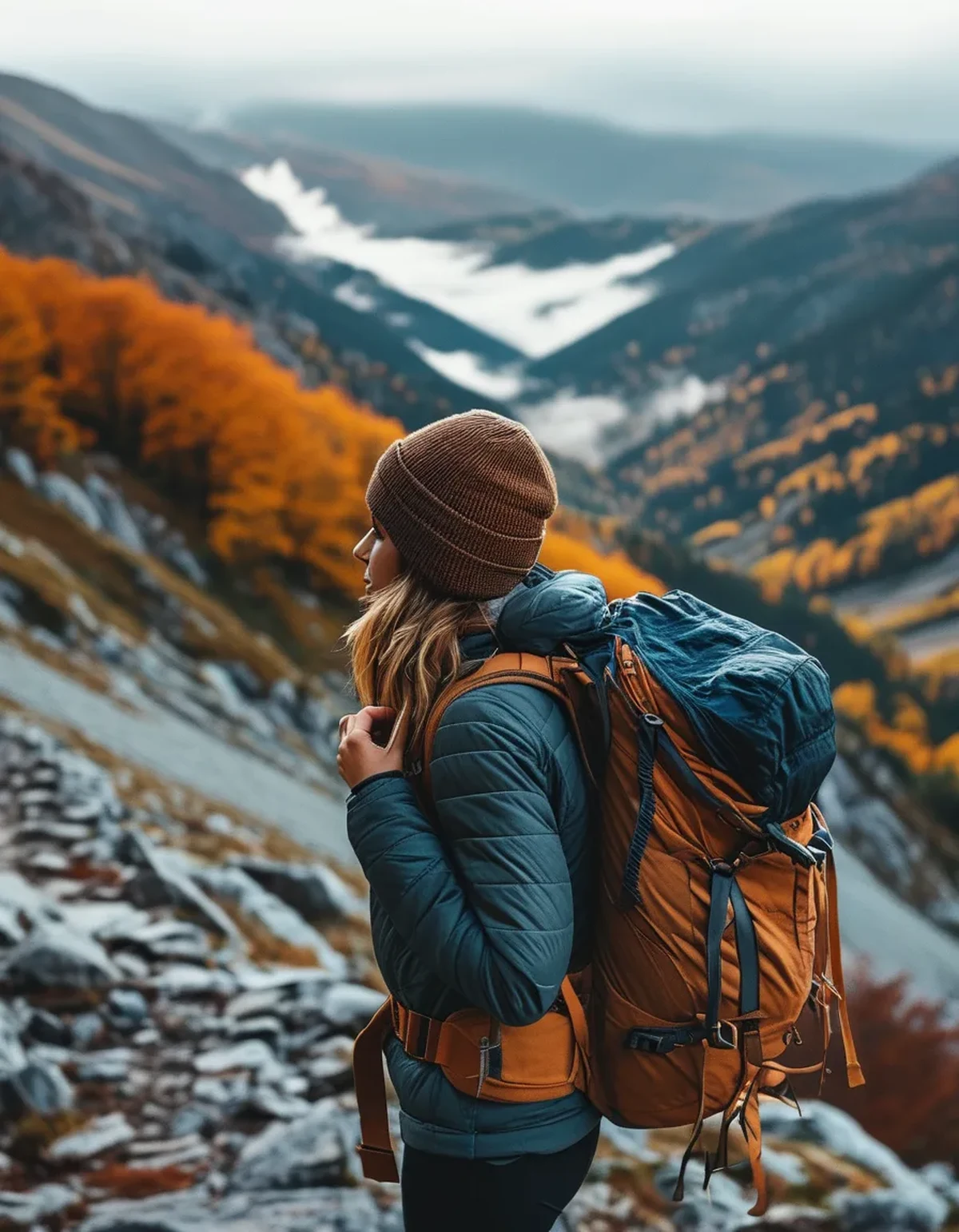
3. Wearing the insulation while moving. This is the classic. You start cold, put on everything, warm up within ten minutes, sweat into your only dry layer, and pay for it at camp. Start slightly cold and let the walking do the work.
4. Choosing the scenic exposed campsite. A ridge site with the view is magnificent at six in the evening and miserable at two in the morning, and it is also where the wind makes cooking difficult and the tent loud. Sheltered and slightly lower is the shoulder season answer, and you can walk up for the sunset.
5. Leaving no note with anybody. The margin for error is smaller and the days are shorter, so the value of somebody knowing your route and your expected return time is much higher than in July. This costs one text message.
The pattern in all five is the same: each is a habit formed in the forgiving part of the year being carried into a less forgiving one.
How should you handle the day itself?
With a few adjustments that are mostly about rhythm rather than effort.
Start earlier than feels necessary. An early start is free margin, and margin is the entire currency of shoulder season hiking. Getting on the trail an hour before you think you need to is the cheapest safety measure available and it usually buys the best light of the day as well.
Take shorter, more frequent stops. Long breaks let you cool down properly, which means re-warming when you start again and burning energy to do it. Five minutes standing with a layer on beats twenty minutes sitting.
Layer proactively at transitions rather than reactively. Add a layer before a ridge crossing, not while you are on it. Remove one at the bottom of a climb rather than a third of the way up. Managing this on your own terms takes seconds; managing it in the wind on a ridge takes much longer and is unpleasant.
Eat before you are hungry and drink before you are thirsty. Cold weather suppresses thirst noticeably, and mild dehydration in cold conditions is common and easy to miss because you are not sweating visibly.
Set a turnaround time and honor it. Decide in advance the time at which you switch to the shorter option or turn around regardless of how close the objective feels. Deciding this in the morning, when you are warm and rational, is much more reliable than deciding it at four in the afternoon when you have invested a whole day.
Watch your slowest partner’s pace, not the group’s average. The group arrives when the last person arrives, and shoulder season punishes an itinerary built on the fastest hiker’s assumptions.
And accept the early night as part of the trip. Twelve hours of darkness is a lot if you expected to be sitting outside, and a good one if you brought a book, planned a real dinner, and treated the long evening in the tent as the point rather than the penalty. A warm bag, hot food, and a headlamp with a red mode is a genuinely lovely way to spend an autumn night.
This is general planning guidance rather than route-specific advice - check current conditions, permits, and local closures for wherever you are actually going, and if a forecast turns, use the plan you made when you were warm.
FAQ: Shoulder Season Overnight Questions, Answered
How much earlier should I really finish than in summer?
Aim to be at camp with ninety minutes of daylight remaining, versus the thirty or forty-five minutes many people run in midsummer. On a first trip of the season, two hours. The buffer absorbs the errors you cannot predict.
Do I need a four-season tent?
Almost never for shoulder season below the snow line. A solid three-season tent, well pitched in a sheltered spot, handles autumn wind and rain fine. Spend the money on the sleeping pad and bag instead, since that is where cold nights are actually won.
What if the forecast changes the night before?
Have a shorter alternative already chosen and pack for the worse forecast, not the better one. The trips that go badly are the ones where the plan had no smaller version, so the only options were as-planned or cancel.
Is it safe to go alone in the shoulder season?
It can be, with more conservative planning - a well-known route, a clear turnaround time, a left note, and a shorter distance than you would attempt with company. Solo removes your margin for a twisted ankle, and shorter days shrink it further, so the answer is to shrink the objective to match.
TL;DR:
- Shoulder season overnights are decided by daylight, not fitness, and terrain removes another thirty to sixty minutes beyond the published sunset.
- Build the plan backward from being camp-ready ninety minutes before sunset, and let the start time fall out of that.
- The pack changes are specific rather than large: better sleep insulation, a second light source, one dry layer reserved for camp, and more calories.
- Set a turnaround time in the morning, pick the sheltered campsite over the scenic one, and start earlier than feels necessary.
The route that felt easy in July is not harder in October. The day it has to fit inside is just smaller, and every good shoulder season decision comes from planning around that one fact.
Keep Reading
This article is for general informational and styling purposes only. Fit, sizing, and product availability may vary — check current details before purchasing.