Hiking Alone: The Solo Trail Playbook for Women
Quick Answer: Solo hiking is safe when it’s systematized. Text one person your trailhead, route, and back-by time before you leave. Pick a well-trafficked trail one difficulty notch below your maximum, with a daylight surplus of at least two hours. Carry a whistle, a headlamp, an extra layer, and a downloaded offline map. Then trust your gut without needing a reason, and go enjoy the quietest thing hiking offers.
The solo hike is hiking in its purest form. Your pace. Your pauses. Your thoughts, unaccompanied and uninterrupted for four hours.
And for a lot of women, it’s also the version that comes with a mental checklist running in the background the whole time.
The fix isn’t bravery. It’s a system — handled once, in advance, so that the hike gets to be the relaxed thing it’s supposed to be.
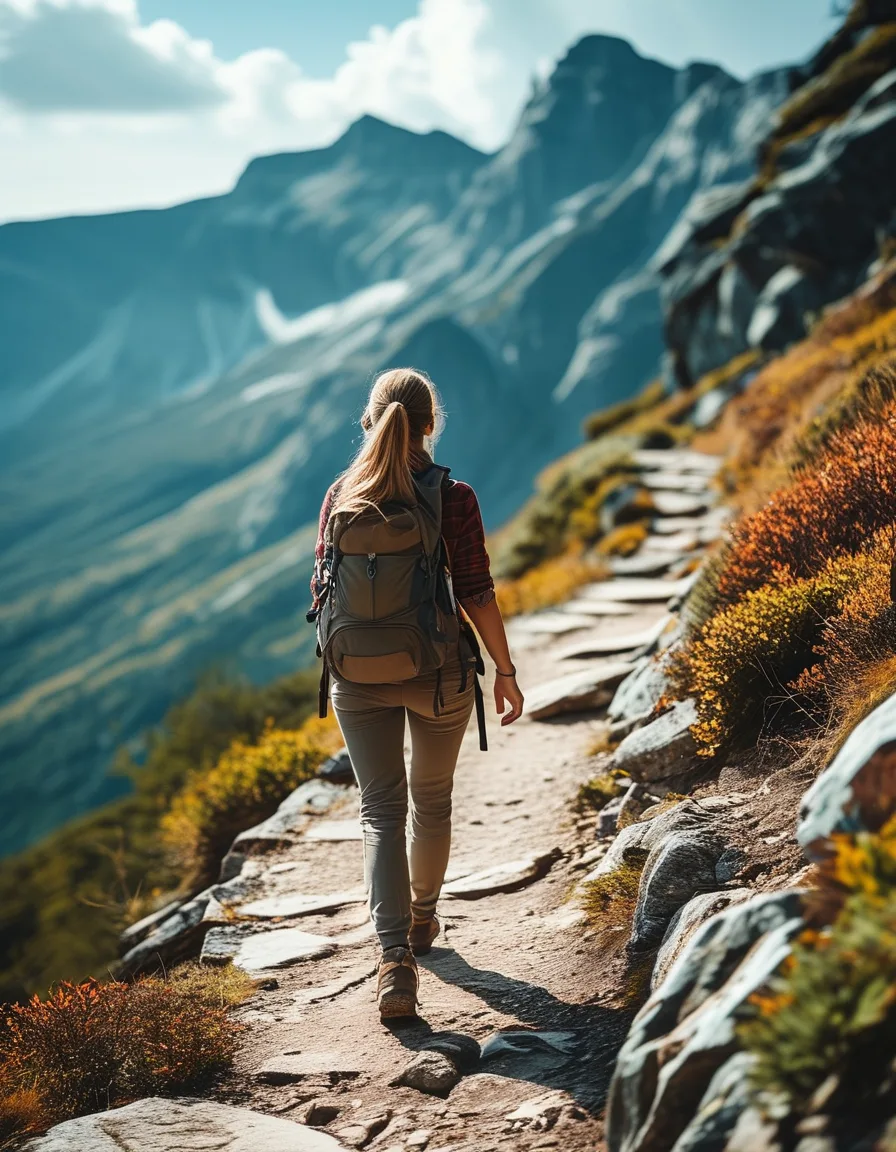
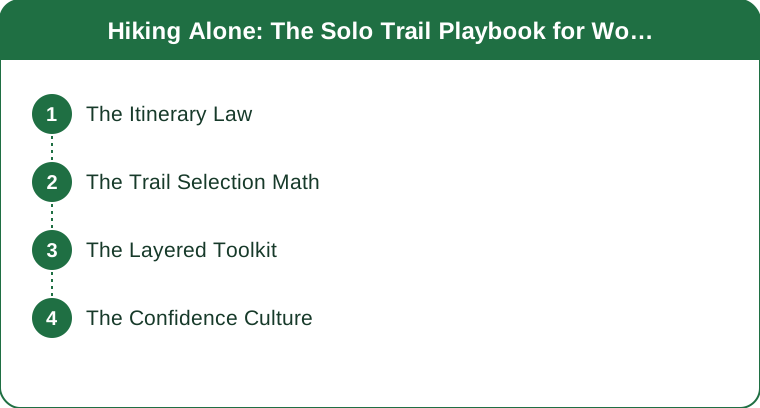
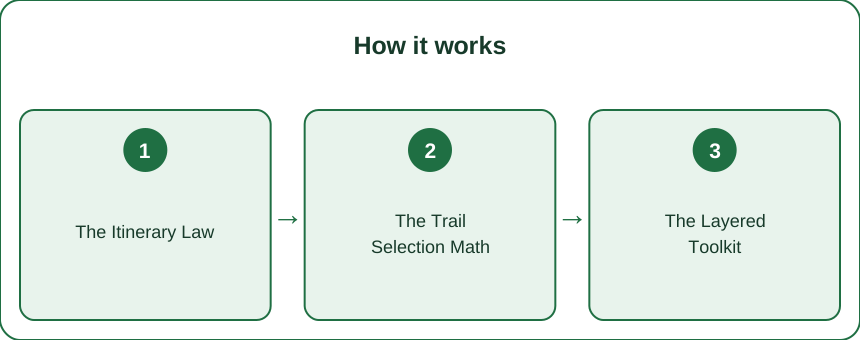
What’s the One Non-Negotiable Rule for Hiking Alone?
Someone knows where you are.
Specifically, one person has four pieces of information before you leave the house: the trailhead, the route, your back-by time, and what you’re driving. That’s a two-minute text, and it’s the single thing that converts “missing” into “findable.”
Search and rescue teams will tell you the same thing — the difference between an hours-long search and a days-long one is almost always whether anyone knew the plan.
Two details people skip:
Agree the overdue protocol in advance. “If you haven’t heard from me by 8pm, call me. If I don’t answer by 9, call the ranger station / park number.” Decide it while you’re both calm, not while one of you is panicking.
Send the check-in on exit. The loop isn’t closed until you say you’re back at the car. A forgotten check-in is how a perfectly fine hiker triggers a very real rescue call.
Add live location sharing if you have signal — iPhone, Android, and most hiking apps do it, and it costs nothing once it’s set up.
How Should You Choose a Trail for a Solo Hike?
Run everything one notch conservative.
Pick well-trafficked. This is the counterintuitive one: other hikers are the safety infrastructure. A popular trail on a Saturday morning is functionally a buddy system — someone will pass you every fifteen minutes. Save the remote, empty, beautiful trail for when you have company.
Go one difficulty step below your maximum. Not because you can’t handle your max, but because a rolled ankle on a solo hike is a much bigger event than a rolled ankle in a group. That margin is what you’re buying.
Build a daylight surplus. Plan to finish at least two hours before sunset, and remember the sun disappears from a valley or a north-facing slope well before it sets. In late summer the light is already going noticeably earlier each week — check the actual sunset time rather than going on how it felt last month.
Check coverage, then download anyway. Look at whether the trail has cell service, and download the offline map regardless. Coverage maps lie, and a dead map on a phone with no signal is the most common way a straightforward hike gets complicated.
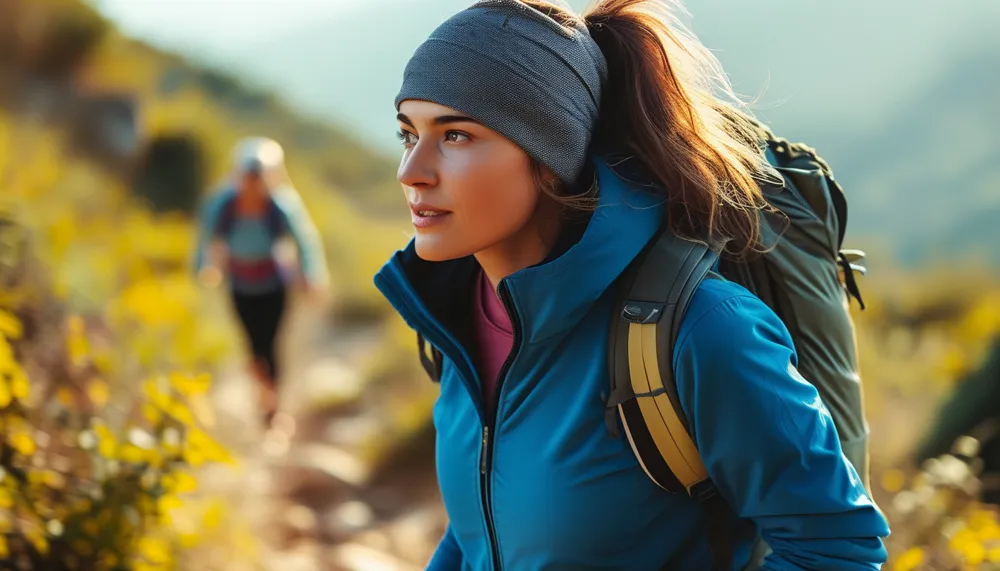
What Should You Pack for a Solo Hike?
The solo pack is your usual kit plus five things that turn crises into inconveniences.
- A whistle. Three blasts is the universal distress signal. It carries far further than shouting and works when you’re too tired or too hurt to yell. Clip it to a shoulder strap, not inside the pack.
- A headlamp. The single highest-value item for its weight. A hike running 90 minutes long is a non-event with a headlamp and a genuine problem without one.
- An extra insulating layer. Weather turns, and a stationary injured person gets cold fast even in mild conditions.
- Charged phone plus a battery pack. Cold and searching-for-signal both drain batteries much faster than you expect.
- First-aid basics — blister care, a compression wrap, painkillers, any personal medication.
Plus water, more food than you think you need, and a knowledge of local wildlife protocols, which are mostly two rules everywhere: make noise so you don’t surprise anything, and keep your food sealed and away from where you sit.
What Nobody Tells You About Solo Hiking Risk
Two things that reframe the whole worry.
The parking lot is the risk, not the trail. Trail incidents involving other people are rare, and a disproportionate share of what does happen occurs at trailheads and parking areas — the transition zones. So put your awareness there: lock the car, leave nothing visible, and pay attention when you arrive and when you return. On the trail itself, the far likelier problems are the boring ones: a twisted ankle, running out of water, losing the path, or losing the light.
The gut gets to decide without a hearing. If a situation feels wrong — a person, a stretch of trail, a weather sky, a route that’s harder than advertised — you leave. Immediately, and without building a case you could defend to someone else. Turning around is not a wasted drive; it’s the cheapest decision available and you’ll be back.
Worth knowing: the solo-hiking women’s community is large and growing, and it runs on exactly this playbook. Local groups, subreddits, and hiking clubs are full of people who’ll tell you which trails are fine alone and which aren’t — the most useful safety data there is, and it’s free.
Frequently Asked Questions
Is it safe for a woman to hike alone?
Statistically, yes — the serious risks on trail are overwhelmingly environmental and medical rather than criminal. What makes solo hiking risky isn’t being alone; it’s being alone and unprepared: no itinerary shared, no headlamp, no offline map, and a trail above your level. Fix those four and you’ve addressed most of the actual risk.
Should I carry bear spray or a personal safety device?
Bear spray where wildlife guidance recommends it — and know how to deploy it, since fumbling it is worse than not having it. A loud personal alarm is small, legal everywhere, and useful. If you hike in areas without cell coverage, a satellite messenger (Garmin inReach, Zoleo, or an iPhone with satellite SOS) is the genuinely transformative purchase.
What if I get lost on a solo hike?
Stop moving. Most people worsen a lost situation in the first twenty minutes by continuing to walk. Check your offline map, retrace only if you’re confident of the way back, and otherwise stay put where you’re visible, put on your layer, and use the whistle in sets of three. Staying findable beats getting further from the trail.
TL;DR:
- Text one person the trailhead, route, back-by time, and vehicle. Agree the overdue protocol in advance.
- Check in when you reach the car — an unclosed loop triggers real rescue calls.
- Choose well-trafficked trails one notch below your max, finishing two hours before sunset.
- Download the offline map even where coverage looks fine.
- Whistle on the strap, headlamp in the pack, extra layer, battery pack, first aid.
- The parking lot is where the people-risk concentrates; on trail, the real risks are ankles, water, and light.
Keep Reading
This article is for general informational and styling purposes only. Fit, sizing, and product availability may vary — check current details before purchasing.