Summer Hiking in the Heat: Stay Safe Out There
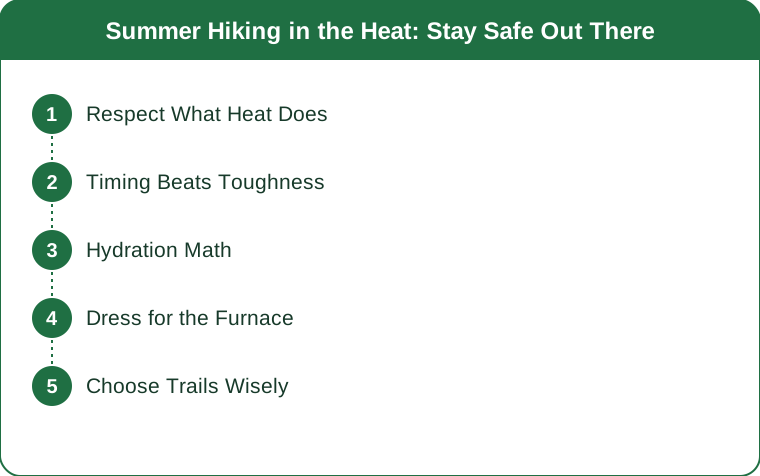
Quick Answer: Heat is summer’s real trail hazard, not bears or blisters. Four rules cover it: start at dawn and be descending by late morning, carry at least half a liter of water per hour plus electrolytes for anything over 90 minutes, wear loose light-colored synthetics or merino with a brimmed hat (never cotton), and choose shaded canyons and waterside routes over exposed ridgelines. Know the signs of heat exhaustion — heavy sweating, dizziness, nausea, headache — and stop at the first one.
Summer opens the best trails in the calendar. It also brings the season’s genuine danger, and it isn’t wildlife.
Heat exhaustion doesn’t announce itself. It builds quietly across a couple of hours, and the first symptom — feeling a bit off — is easy to attribute to a hard climb.
Hot-weather hiking is wonderful with preparation and genuinely risky without it. Here’s the preparation.
What are the signs of heat exhaustion on a hike?
Learn these, because catching them early is the entire difference between a hard day and an emergency.
Heat exhaustion: heavy sweating, cool and clammy skin, dizziness or lightheadedness, nausea, headache, muscle cramps, weakness, a fast weak pulse. If you notice any of these, stop immediately — get into shade, sit down, drink water with electrolytes, loosen or remove layers, and cool the skin with water if you have any to spare.
Heat stroke is a medical emergency. The distinguishing signs are confusion or altered behavior, skin that has gone hot and dry (sweating has stopped), a body temperature above 104°F/40°C, and possible loss of consciousness. Call emergency services immediately, move the person to shade, and cool them aggressively with water on the skin and airflow while waiting.
The most important practical point: the person experiencing it is often the last to notice. Confusion is a symptom. Hike with someone, and check on each other out loud rather than assuming they’d say something.
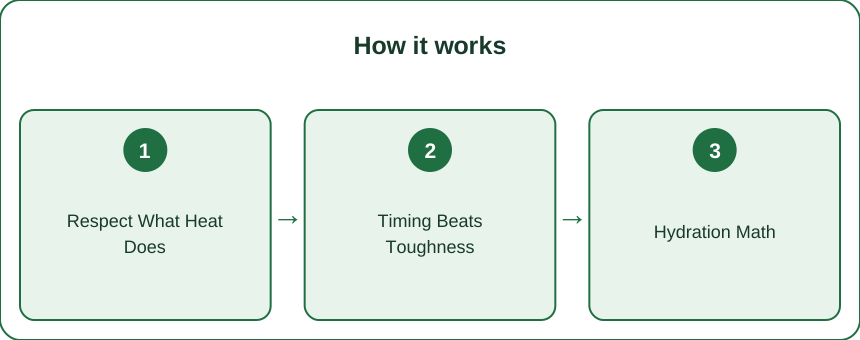
Why does timing matter more than fitness?
Because the mountain doesn’t care how fit you are at 2 p.m.
Start at dawn and be heading down by late morning. Temperatures typically peak between 3 and 5 p.m., but exposed rock and sand radiate heat well before that — a south-facing slope can be brutal by 11 a.m. even on a moderate day.
The alternative is an evening hike, starting late afternoon and finishing at dusk, with a headlamp packed in case you misjudge the light.
Midday summer sun is for shade and lunch, not exposed switchbacks. Plan the hard climbing for the first two hours and the descent for the third.
Fitness helps you move faster; it does not change how your body sheds heat. Heat illness affects trained athletes routinely, which is exactly why timing outranks toughness here.
How much water should you carry hiking in heat?
At least half a liter (about 17 oz) per hour as a floor, and more on exposed climbs — a liter per hour is not unreasonable on a hot, sun-exposed ascent.
Add electrolytes for anything over 90 minutes. In heat you lose significant sodium through sweat, and replacing water without salt can leave you feeling worse rather than better. A tablet or a salty snack both work.
Drink on a schedule, not on thirst. Thirst lags behind actual deficit, particularly in dry air where sweat evaporates so fast you don’t notice you’re producing it. A few sips every 15–20 minutes beats a large drink every hour.
Water weight is the cheapest insurance there is. A liter weighs about 2.2 lb. That’s a genuinely small cost against the alternative, and it’s the thing people most often cut to save weight.
Check for water sources on the route and don’t rely on seasonal ones — creeks marked on maps regularly run dry by August. If you plan to refill, carry a filter, and carry enough to get to the source and back if it isn’t there.
What should you wear hiking in hot weather?
Loose, light-colored, and not cotton.
- Loose beats tight. Airflow between fabric and skin is what allows sweat to evaporate, and evaporation is how you cool.
- Light colors reflect rather than absorb solar radiation.
- Synthetics and merino wick and dry. Cotton soaks, clings, stops breathing, and stays wet — it’s genuinely a liability in heat and dangerous when temperatures drop at altitude.
- A real brimmed hat, not a cap. You want the ears and the back of the neck covered.
- Sunscreen, reapplied every two hours, and more often if you’re sweating heavily.
- UPF fabrics beat bare skin on exposed sections. This surprises people, but a loose long-sleeve UPF shirt is cooler in direct sun than an uncovered arm, because it blocks radiation while still allowing airflow.
Sunglasses and a light buff for the neck round it out. Both weigh almost nothing.
How do you pick a summer trail?
Summer favors a different kind of route than spring does, and choosing well removes most of the risk before you start.
Look for: shaded canyons, tree-covered climbs, north-facing slopes (which get far less direct sun), and waterside routes where you can cool off and refill.
Avoid or reschedule: exposed ridgelines, desert routes at midday, long sections of open scree or slickrock, and anything with a sustained exposed climb.
Before you go: check for water sources, check cell coverage, and tell someone your plan and your expected return time. That last one is free and it’s the single most effective safety measure on this list.
The best summer hike is the one planned around the sun rather than against it.
5 Mistakes Everyone Makes
- Starting at 9 a.m. because that felt early. By the time you’re on the exposed section it’s 11 and the rock is radiating. Dawn means dawn.
- Drinking only when thirsty. Thirst is a lagging indicator, especially in dry air. Sip on a schedule.
- Water without electrolytes on long days. Replacing sweat with plain water alone can leave you dizzy and cramping. Salt matters past about 90 minutes.
- Wearing a cotton T-shirt. It soaks, clings, stops evaporating, and gets cold at altitude. The single most common clothing error.
- Cutting water to save weight. A liter is 2.2 lb. It’s the last thing to cut, not the first.
FAQ
What temperature is too hot to hike?
There’s no single cutoff, because humidity, sun exposure, elevation, and your own acclimatization all matter. A useful guide is the heat index: above about 90°F/32°C heat index, shift to dawn starts and shaded routes; above roughly 103°F/39°C, heat illness risk rises sharply and exposed hiking is a poor idea regardless of fitness. Direct sun on rock can add 15°F or more to what the forecast says.
How much water do you need for a 3-hour summer hike?
At least 1.5 liters as a minimum, and 2 to 3 liters is more realistic on an exposed route in real heat. Add an electrolyte source since the hike exceeds 90 minutes. If a reliable water source is on the route and you carry a filter, you can start lighter — but confirm the source is running before you count on it.
What are the first signs of heat exhaustion?
Heavy sweating, dizziness or lightheadedness, headache, nausea, muscle cramps, and weakness with a fast weak pulse. Stop and get into shade at the first of these rather than pushing to a summit. Confusion, hot dry skin, or loss of consciousness indicate heat stroke, which is a medical emergency requiring immediate emergency services and aggressive cooling.
TL;DR:
- Heat is the real summer trail hazard. Learn heat exhaustion signs and stop at the first one.
- Heat stroke — confusion, hot dry skin — is an emergency. Call for help and cool aggressively.
- Start at dawn, be descending by late morning. Timing beats fitness.
- Half a liter of water per hour minimum, more when exposed, electrolytes past 90 minutes.
- Drink on a schedule; thirst lags behind deficit.
- Loose, light-colored synthetics or merino, brimmed hat, reapplied sunscreen. Never cotton.
- Choose shaded canyons, north-facing slopes, and waterside routes. Tell someone your plan.
Keep Reading
This article is for general informational and styling purposes only. Fit, sizing, and product availability may vary — check current details before purchasing.