The Complete Guide to Choosing Hiking Footwear for Shoulder Season
Quick Answer: Autumn hiking asks for grip on wet surfaces, some water resistance, and enough warmth for a cold start without overheating in the afternoon. That usually means a mid-height shoe or a light boot with an aggressive lug pattern and a breathable membrane - not a summer trail runner and not a heavy winter boot. Grip and sock system matter more than boot height. Get the socks right and half the problem disappears.
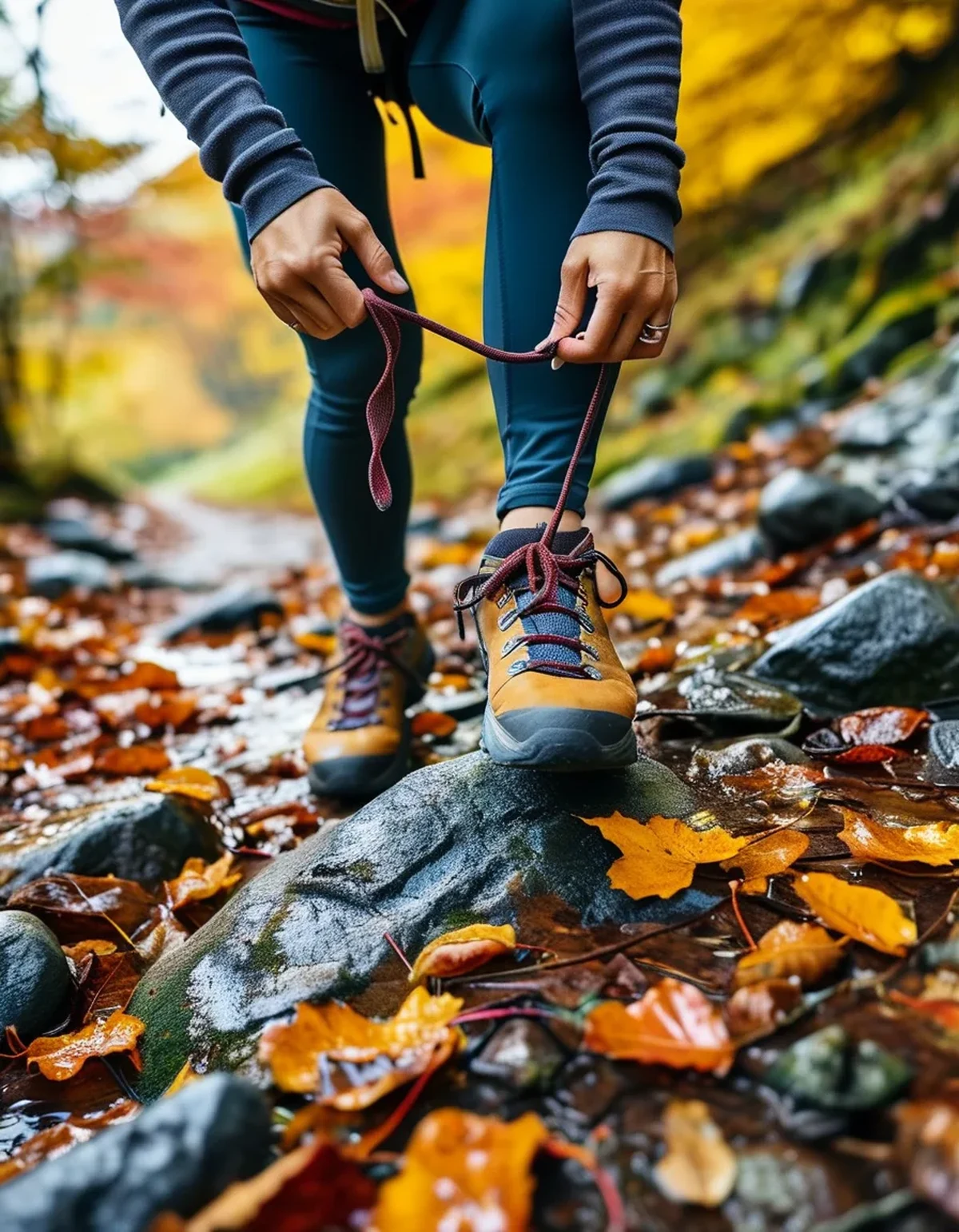
Autumn ground is wet, soft, and hidden under leaves.
Which is a completely different problem from either summer dust or winter snow.
What actually changes about the ground in autumn?
Four things, and each of them changes what your footwear needs to do.
Everything holds water. Cooler temperatures and lower sun angles mean the ground stops drying between rainfalls. A trail that shed water in July stays damp for days in October, and the mud that appears is a different consistency - soft, deep, and slippery rather than dusty. Footwear that was fine on hardpack finds nothing to grip.
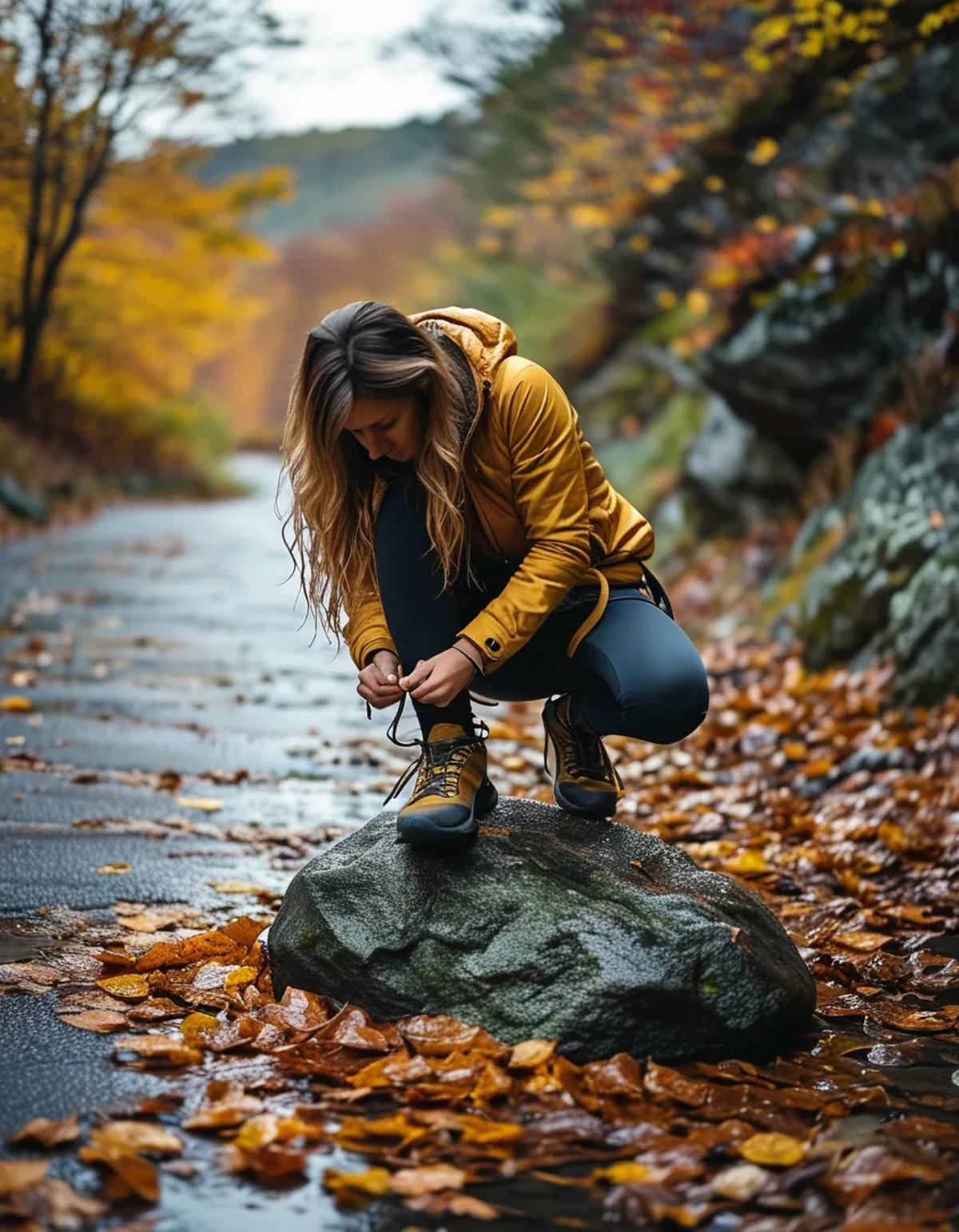
Leaves cover the trail and hide what is underneath. This is the specific autumn hazard, and it is genuinely underestimated. A layer of fallen leaves conceals roots, rocks, holes, and wet patches, and it also forms a slick surface in its own right when wet - leaves on rock are among the slipperiest natural surfaces you will encounter. You cannot read the ground visually any more, which means your footwear and your foot placement have to do more work.
Roots and rock become dramatically more slippery. Damp wood and wet stone lose most of their friction, and they are unavoidable on most trails. Sole rubber compound matters more in autumn than in any other season, because this is where the difference between compounds actually shows.
Morning frost appears before winter does. Early autumn mornings can produce a thin frost or a light ice glaze on exposed rock and boardwalk, which then melts by mid-morning. The first hour of a cold-morning hike is the highest-risk hour, and it catches people out because it does not feel like winter yet.
And stream crossings change. Autumn rain raises water levels and increases flow, so crossings that were ankle-deep stepping stones in summer become genuine obstacles. Water resistance matters less than grip when wet - the crossing you can grip through is safer than the one that keeps your feet dry.
All of which points at the same conclusion. The autumn requirement is traction on wet, soft, and hidden surfaces, with enough protection to handle what you cannot see. Height and insulation are secondary to what is on the bottom of the shoe.
Boot or trail shoe - what should you actually choose?
It depends on your terrain and your load, and the honest answer is that most people over-boot.
Trail shoes work for most autumn day hikes. They are lighter, they dry faster, they flex naturally, and modern outsoles grip very well. For maintained trails with a day pack, a trail shoe with an aggressive lug pattern is usually the better choice, and the weight saving over a day is substantial - every step lifts the shoe, so weight on the foot costs disproportionately more than weight on your back.
Mid-height shoes are the shoulder-season sweet spot. A mid cut keeps mud, leaf litter, and small stones out of the shoe, which is exactly the autumn nuisance, and it offers some ankle support on uneven hidden ground. This is the category most autumn hikers are actually looking for and it sits between the two things they usually consider.
Full boots earn their place with load and terrain. Carrying significant weight, walking on genuinely rough or off-trail ground, or hiking multi-day trips are where a stiffer, taller boot pays off. A stiff sole reduces foot fatigue under load and protects against the twisting forces that a heavy pack amplifies.
Ankle support is more limited than the marketing implies. A boot restricts some ankle movement, and that helps under load on rough ground. It does not make you immune to a rolled ankle, and it can reduce the natural ankle strength that protects you. Strong ankles and good foot placement matter more than boot height for most people on most trails.
Stiffness is the underrated variable. Sole stiffness determines how much your foot has to work and how well the shoe handles rocky ground. Too stiff on easy terrain is tiring; too flexible under load is exhausting - match it to what you actually do rather than to what you aspire to.
And the fit question overrides all of it. A trail shoe that fits beats a boot that does not, every time. Nothing in this section matters as much as whether the shoe fits your foot, which is the next section.
How should hiking footwear actually fit?
With more room than you expect, tried on at the right time of day, with the socks you will wear.
Size up from your normal shoe size, usually. Feet swell during a long walk, and descending pushes your foot forward. You want roughly a thumb’s width between your longest toe and the end of the shoe when standing - if your toes touch the end on a descent, you will lose toenails.
Try them on in the afternoon or after a walk. Feet are measurably larger later in the day and after activity. A shoe fitted first thing in the morning will be too small on the trail, which is one of the most common fitting errors.
Bring the socks you actually hike in. Sock thickness changes fit substantially, and autumn socks are thicker than summer ones. Fitting in thin socks and hiking in thick ones is how a well-chosen shoe becomes a blister factory.
Width matters as much as length. Your foot should not be compressed at the widest point, and many brands run narrow. If your foot is wide, look specifically for wide fittings rather than sizing up in length, which creates a sloppy heel instead.
Heel lock is the anti-blister feature. Your heel should not lift when you walk uphill. Heel lift is the single biggest cause of heel blisters, and it is usually fixable with a lacing technique - the extra eyelet at the top of most hiking shoes exists specifically for this.
Test on a slope in the shop. Most outdoor shops have a ramp for exactly this. Walk up and down it - uphill reveals heel lift, downhill reveals whether your toes hit the front. Two minutes of this tells you more than an hour of standing around.
And accept that fit is individual. The most recommended boot in the world may not suit your foot shape. Reviews cannot tell you about fit, only about durability and grip - which is why buying footwear online without trying it is a gamble in a way that buying a jacket is not.
What about waterproofing - is a membrane worth it?
In autumn, usually yes - but with a clear understanding of what it does and does not do.
A membrane keeps external water out, up to a point. Wet grass, puddles, light rain, and mud all stay outside the shoe. For autumn conditions this is genuinely useful, and it is the season where waterproof footwear earns its keep most clearly.
It also traps sweat. Membranes are breathable in the sense that they transmit some vapour, and they are always less breathable than a non-membrane shoe. On a warm afternoon your feet will be damper in a waterproof shoe than in a ventilated one - the water is just coming from inside.
Water over the collar defeats it entirely. If water comes in over the top of the shoe - a deep puddle, a stream, heavy rain running down your legs - the membrane then holds that water in, and a waterproof shoe takes far longer to dry than a mesh one. This is the main argument against them.
Height determines how often that happens. A low waterproof shoe fills easily; a mid or boot height keeps the collar above most water. Waterproofing makes more sense as the shoe gets taller, which is part of why mid-height works so well for autumn.
Gaiters solve the collar problem cheaply. A pair of low gaiters keeps water, mud, leaf litter, and small stones out of the top of the shoe. This is the most underrated piece of autumn hiking kit and costs very little.
Membranes degrade with dirt. A shoe caked in mud does not breathe, and the water-repellent treatment on the outer fabric wears off, which lets the outer soak through and feel wet even when the membrane holds. Clean them after muddy hikes and re-treat the outer periodically - most people never do either, and then conclude the waterproofing failed.
And for genuinely wet conditions, some people go the other way deliberately. Non-waterproof mesh shoes with wool socks get wet and then drain and warm up quickly. This works better than it sounds in mild wet conditions, though it is unpleasant once temperatures drop.
What socks should you wear, and how do you look after all of it?
Wool in the right thickness, and a care routine that most people get wrong in the same specific ways.
The sock system
Merino wool is the default for good reason. It manages moisture well, insulates even when damp, resists odour, and is comfortable across a wide temperature range. For shoulder season, where mornings are cold and afternoons are warm, that range is exactly what you need.
Never wear cotton. Cotton absorbs moisture, holds it against the skin, loses all insulating value when wet, and causes blisters through friction. Cotton socks are the single most common cause of hiking blisters and the easiest thing in this entire guide to fix.
Thickness should match the shoe and the temperature. A midweight sock suits most autumn hiking - enough cushioning and warmth without changing the fit dramatically. Thicker is not automatically warmer if it compresses your foot and restricts circulation, which is a common winter mistake made early.
Height should exceed the shoe collar. A sock that ends below the top of the boot means fabric rubbing against skin at the collar. Crew height for mid shoes, higher for boots.
Consider a liner sock for blister-prone feet. A thin liner under the main sock lets the two layers slide against each other rather than the sock sliding against your skin. This is the most effective anti-blister measure there is for people who blister regardless of fit.
Carry a spare pair, always. Dry socks halfway through a wet day transform the second half, and they weigh almost nothing. A spare pair is the highest comfort-per-gram item in a day pack.
And replace them when the cushioning flattens. Socks wear out invisibly - the fabric looks fine while the cushioning has compressed away. Old socks contribute to hot spots and are cheap to replace compared to everything else here.
Cleaning, drying, and storage
Clean off mud after every muddy hike. Dried mud abrades the fabric, blocks the membrane’s breathability, and holds moisture against the materials. Rinse with water and a soft brush, and do it before it dries hard if you can.
Never dry them near direct heat. A radiator, a fire, or a hot car will crack adhesives, shrink leather, and destroy membranes. Heat is the fastest way to ruin hiking footwear and it is what everyone does when they get home cold and wet.
Dry them at room temperature with the insoles out. Remove the insoles and loosen the laces fully so air can circulate through the whole shoe. Newspaper inside speeds it up considerably and draws moisture out of the lining.
Re-treat the outer fabric periodically. The water-repellent finish on the outside wears off with use, and when it does the outer soaks through and the shoe feels wet even though the membrane is intact. A wash-in or spray-on treatment restores it and takes ten minutes.
Store them somewhere cool, dry, and dark. Not a hot attic, not a damp shed, not a plastic bag. Heat and humidity degrade adhesives and midsole foam even when the shoes are not being worn - shoes can effectively age out in storage.
Check the outsole for wear before each season. Lug depth determines grip, and worn lugs on wet autumn ground are genuinely dangerous. If the lugs are rounded off, the shoe is finished for this season regardless of how the upper looks.
And replace the insoles before replacing the shoes. Insoles compress long before the shoe wears out, and a fresh pair restores a surprising amount of cushioning. It is the cheapest way to extend a good pair by a season.
5 Mistakes Everyone Makes With Autumn Footwear
Buying a boot heavier than the terrain needs. People buy for the hardest hike they imagine and then carry that weight on every easy one. Weight on the foot costs several times what weight on the back does across a day, so a heavy boot for casual trails is a poor trade.
Fitting in the morning with thin socks. Feet are smaller in the morning and thin socks change the fit. Fit in the afternoon, in your hiking socks, and use the shop’s ramp to test uphill and downhill.
Drying wet boots on a radiator. It feels sensible and it destroys them - cracked adhesives, shrunk leather, damaged membranes. Room temperature, insoles out, newspaper inside.
Assuming waterproof means dry. Water over the collar puts water inside a shoe that then cannot drain, and a worn outer treatment makes the whole shoe wet even when the membrane works. Gaiters and periodic re-treating are what make waterproofing actually deliver.
Ignoring worn lugs. The upper looks fine, so the shoe seems fine - but grip comes entirely from the outsole, and autumn is the season that punishes worn tread. Look at the bottom of your shoes before the first wet hike of the season.
And the bonus mistake: new footwear on a big hike. Even modern shoes that need little breaking in should do a few short walks first. Discovering a hot spot two miles from the car is a very different problem from discovering it on a local loop. If you develop persistent foot pain that does not resolve with rest and a fit change, that is worth having assessed properly. This is general information, not medical advice.
FAQ: Autumn Hiking Footwear, Answered
Do I really need different footwear for autumn?
Not necessarily different footwear, but different priorities - grip on wet ground and keeping leaf litter and mud out. If your summer shoes have good lugs and you add gaiters and wool socks, that may be enough for maintained trails.
How do I know when to replace hiking shoes?
Look at the lugs first - rounded, shallow tread means the grip is gone. Compressed midsole cushioning is the other signal, and it appears as the shoe feeling harder underfoot on descents. Neither shows in how the upper looks.
Are trail runners really safe on rough ground?
For many people on maintained trails with a day pack, yes - they have excellent grip and are widely used for exactly this. The trade-offs are less protection from rocks and less support under a heavy load, which is why terrain and pack weight decide it rather than a general rule.
What is the single best purchase for autumn hiking?
Good merino socks and a pair of low gaiters, assuming your footwear is sound. Together they cost a fraction of new boots and they address the two specific autumn nuisances - wet feet and debris in the shoe - more directly than a new pair of shoes would.
TL;DR:
- Autumn ground is wet, soft, and hidden under leaves - grip on wet rock and roots is the priority.
- Mid-height shoes are the shoulder-season sweet spot; most people buy more boot than they need.
- Fit in the afternoon, in hiking socks, with a thumb’s width at the toe and no heel lift.
- A membrane helps in autumn but traps water that comes over the collar - gaiters solve that cheaply.
- Merino socks, never cotton, and check your outsole lugs before the first wet hike of the season.
Turn your hiking shoes over and look at the lugs this week. If they are rounded off, that is the decision made for you.
Keep Reading
This article is for general informational and styling purposes only. Fit, sizing, and product availability may vary — check current details before purchasing.