Why Elevation Gain, Not Distance, Is the Number That Actually Predicts How Hard a Hike Will Feel
Quick Answer: A hike’s real difficulty comes from elevation gain per mile, not total mileage — a flat 8-mile hike is easier than a 4-mile hike with 2,000 feet of gain. Use gain-per-mile as your planning number, not distance alone.
You’ve done it before: picked a hike because the mileage looked manageable, then found yourself gasping halfway up a switchback with legs burning at mile two. The distance told you nothing about what was actually coming.

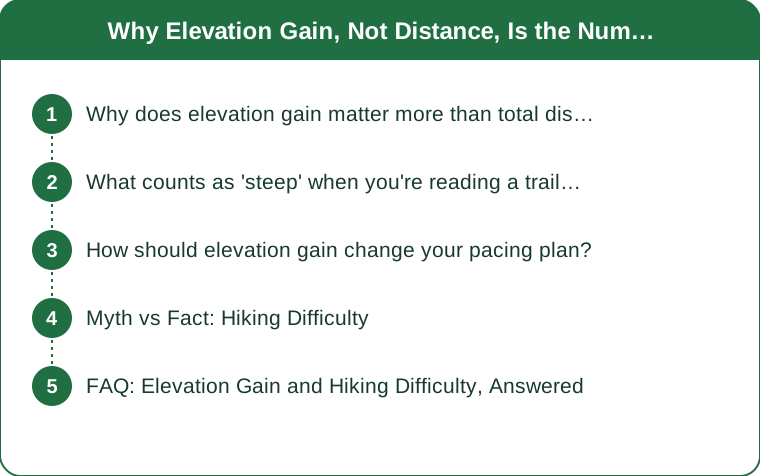
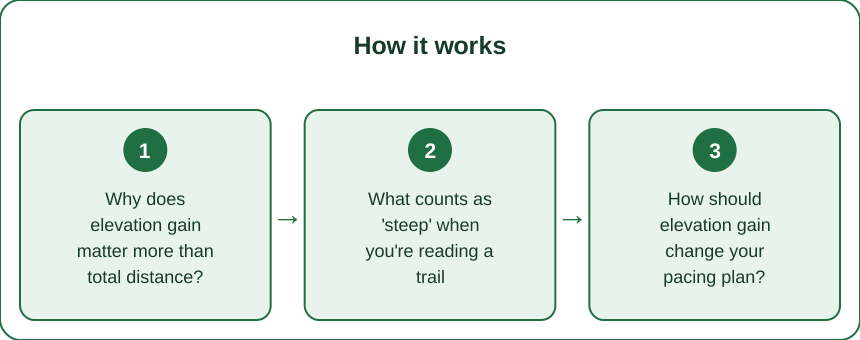
Why does elevation gain matter more than total distance?
Your body burns roughly the same energy climbing 1,000 feet of elevation as it does covering 2-3 extra flat miles, according to the general hiking-effort rule of thumb used by trail planners. That means a short, steep hike can be a genuinely harder workout than a long, flat one, even though the mileage number looks smaller on paper.
Elevation gain also determines how much your heart rate spikes, how sore your legs are the next day, and how much daylight you’ll actually need — none of which distance alone can tell you.
What counts as ‘steep’ when you’re reading a trail description?
As a working guideline, under 200 feet of gain per mile feels easy, 200-500 feet per mile feels moderate, and anything over 500 feet per mile is genuinely steep for most hikers carrying a daypack. A trail listed as 6 miles with 3,000 feet of gain (500 ft/mile) will feel dramatically harder than a 6-mile trail with 600 feet of gain.
Most trail apps display this as an elevation profile graph — glance at the steepest section, not just the total, since a short brutal climb buried in an otherwise flat hike can still wreck your pace.

How should elevation gain change your pacing plan?
Plan roughly 30 minutes per 1,000 feet of gain on top of your normal flat-mile pace, and build in extra water and snack stops before the climb starts, not after you’re already gassed. Hikers who pace to their usual flat-ground speed on a high-gain trail consistently run out of daylight or energy before the summit.
Descending fast trails also taxes your knees more than flat trails, so budget recovery time for the day after a high-gain hike the same way you would after a hard leg day.
Myth vs Fact: Hiking Difficulty
Myth: A longer hike is always harder than a shorter one. Fact: A short, steep hike with heavy elevation gain per mile routinely outranks a long, flat trail in actual physical difficulty.
Myth: Elevation gain only matters for mountain hikes. Fact: Rolling hills with repeated short climbs can add up to significant cumulative gain that catches hikers off guard on trails that don’t look ‘mountainous’ at all.
FAQ: Elevation Gain and Hiking Difficulty, Answered
Where do I find a trail’s elevation gain before I go?
Most trail apps (AllTrails and similar) list total elevation gain and show a profile graph on every trail page — check both, since the graph reveals where the steep sections actually sit.
Is elevation loss on the way down just as tiring as gain?
Differently tiring — descending taxes your knees and quads eccentrically rather than your cardio system, so a trail with heavy loss can leave you sore even if your heart rate stayed low.
What’s a reasonable elevation gain for a first-time serious hiker?
Aiming for 500-800 feet of total gain on your first few hikes lets you feel the difference without overcommitting, then scale up from there as your legs adapt.
TL;DR:
- Elevation gain per mile predicts difficulty far better than total distance
- Under 200 ft/mile is easy, over 500 ft/mile is genuinely steep
- Budget about 30 extra minutes per 1,000 feet of gain
- Check the elevation profile graph, not just the total number, before you commit
Next time a hike looks deceptively short on the map, check the gain first — it’s the number that actually tells you what you’re in for.
Keep Reading
This article is for general informational and styling purposes only. Fit, sizing, and product availability may vary — check current details before purchasing.