Trekking Poles: Hiking's Most Debated Accessory, Settled
Quick Answer: Trekking poles are worth it if your hike involves sustained descents, a pack over about 20 lb, or knees with a history. Planting poles on downhills can cut peak force through the knee joint by roughly 20%, which compounds across the several thousand steps of a long descent. For short, flat walks they’re optional clutter — and used with dangling straps, they help almost nobody.
Every trailhead has both camps. The converted, who assemble poles before they tighten their laces. And the skeptics, who watched someone carry two aluminum sticks for eight miles without planting either one.
The debate never resolves because both camps are describing different hikes.
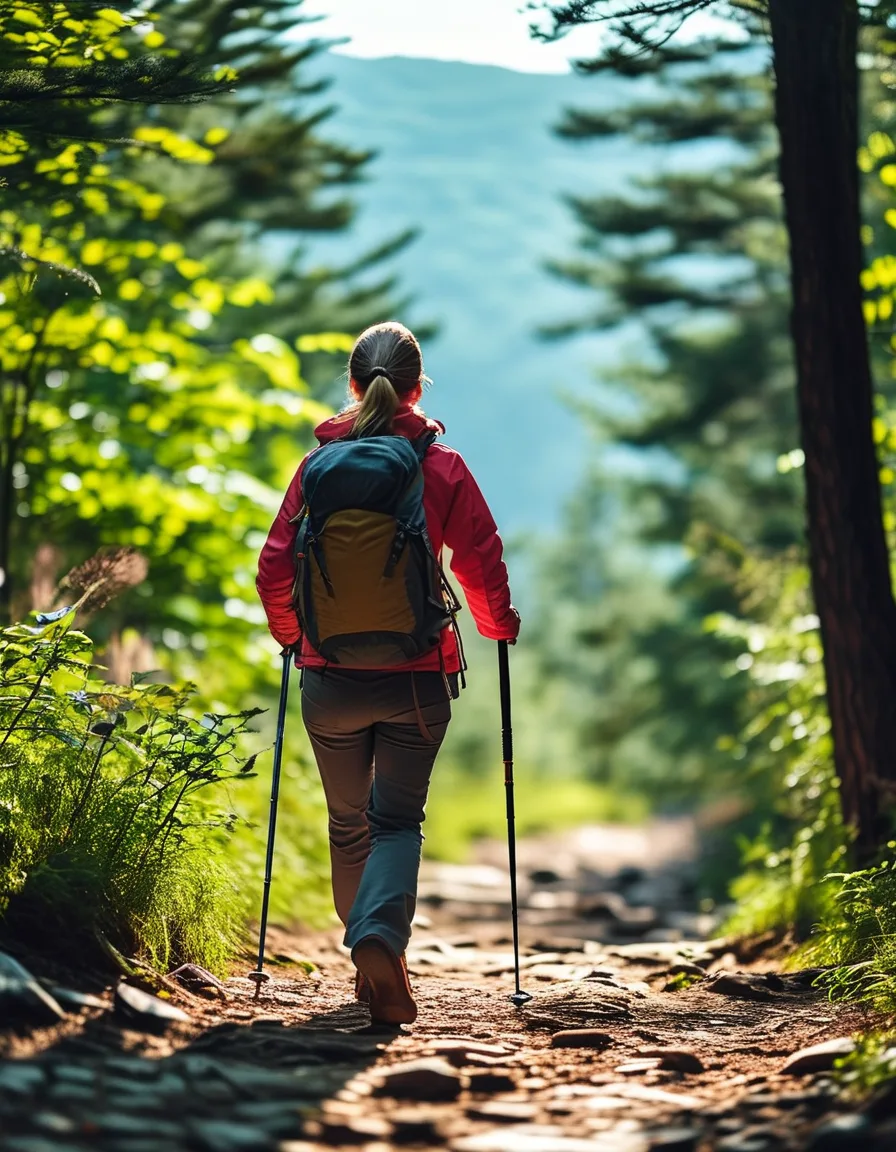
Do Trekking Poles Actually Save Your Knees?
This is the strongest evidence in the whole pole file, and it’s about going down.
Descending loads the knee with impact forces that can reach several times body weight per step. Research on pole use during downhill hiking consistently finds meaningful reductions in that peak force — commonly in the 15–25% range — because each plant transfers a share of the load into your arms and the ground ahead of you.
Now do the arithmetic. A 3,000-foot descent is roughly 4,000–5,000 steps. Shaving even a fifth off each one is not a rounding error; it’s the difference between walking down a mountain and paying a tax at the bottom.
If your knees write op-eds on the way down, this is your answer.
When Do Poles Help Most on Flat Ground?
Two situations: heavy loads and long days.
Poles recruit the upper body into forward propulsion — Nordic walking physics, trail edition. Under a loaded pack they steady the whole system, which matters most on stream crossings, wet roots, and loose scree where a single bad plant becomes a story you tell at urgent care.
They also buy you late-day stability. Most trail stumbles happen in the final third of a hike, when the stabilizing muscles are cooked and foot placement gets sloppy. Two extra contact points at exactly that moment is cheap insurance.
Backpackers converted en masse. They had reasons.

How Do You Use Trekking Poles Correctly?
Poles help when used and clutter when carried. Three things separate the two outcomes.
Straps, done right. Come up through the loop from underneath, then close your hand over the strap. Your weight rides on the strap, not your grip. Almost everyone does this backwards on the first hike, then grips so hard their forearms burn by mile three.
Length by terrain. Set the pole so your elbow sits at about 90 degrees on flat ground. Shorten by roughly 5–10 cm for sustained climbs, lengthen by the same for long descents. If your poles adjust in seconds, adjust them; if they don’t, split the difference.
Rhythm. Opposite hand to opposite foot, the same pattern your arms already swing in. It clicks in about ten minutes of walking and then never leaves.
The dangling-poles hiker is the skeptics’ entire evidence base, and honestly, they’re right about that specific person.
5 Mistakes Everyone Makes With Trekking Poles
- Gripping the handle like a hammer. The strap carries the load. White knuckles mean you skipped the strap setup.
- One length for the whole hike. Same length up and down means you’re either reaching on the climb or hunching on the descent.
- Planting too far forward. A pole stabbed way out ahead brakes you and stresses the shoulder. Plant near your foot, slightly behind the lead.
- Carrying them “just in case.” Poles in your hands but never planted are 16 oz of dumbbells. Stow them on the pack or use them.
- Skipping the rubber tips on rock. Carbide tips skate on slab and chew up trails. Tips cost a few dollars and fix both.
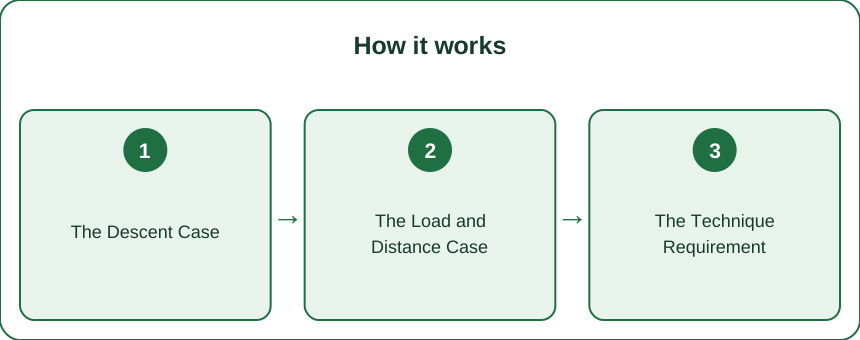
The Verdict Matrix
Bring poles for: descent-heavy routes, any pack over ~20 lb, knee or hip history, stream crossings and scree, snow travel, and any hike where the extra confidence changes what you’re willing to attempt.
Skip them for: short flat strolls, dense scrambling where you want your hands free, and crowded urban-adjacent trails where you’re mostly navigating other people.
Undecided? Rent a pair, or borrow one from the trailhead friend who owns four. One steep descent is usually the whole conversion story — people don’t argue about poles after their first properly-poled 2,000-foot downhill.
Frequently Asked Questions
Is one trekking pole as good as two?
For light stability on easy terrain, one is fine and leaves a hand free. For descent load-sharing, two is meaningfully better — the force reduction depends on both sides getting a plant, and a single pole creates an asymmetric gait over long distances.
Are carbon or aluminum poles better?
Aluminum bends under abuse and keeps working; carbon is lighter and stiffer but can snap outright when levered sideways between rocks. For rough scrambly terrain or if you’re hard on gear, aluminum. For long-distance weight-counting, carbon.
Do trekking poles make hiking easier or just different?
Both. They redistribute effort rather than remove it — your arms do measurable work, so your heart rate can actually run slightly higher on flats. The payoff is lower joint stress and better stability, not less total effort.
One honest caveat: if knee pain shows up during ordinary walking, not just on descents, poles are a band-aid on something that deserves a look. Persistent joint pain, swelling, or instability is worth a visit to a physical therapist or sports physician before you troubleshoot it with gear.
TL;DR:
- Poles cut peak knee force on descents by roughly 15–25%, multiplied across thousands of steps.
- Heavy packs, long days, stream crossings, and loose terrain are the other strong use cases.
- Weight rides on the strap, not the grip — come up through the loop from below.
- Elbow at 90° on flat; shorten ~5–10 cm uphill, lengthen for long descents.
- Optional for short flat walks and hands-on scrambles.
- Borrow a pair for one big downhill. That hike decides it for you.
Keep Reading
This article is for general informational and styling purposes only. Fit, sizing, and product availability may vary — check current details before purchasing.