Why Your First Cold-Morning Hike of Fall Goes Wrong
Quick Answer: Fall’s first cold hike fails for four compounding reasons: you start too warm and sweat into your layers, you drink far less than you need because thirst drops in cold air, you misjudge daylight by an hour or more, and wet leaves plus overnight moisture make familiar footing genuinely worse. None is dramatic alone. Together they turn an easy summer route into a long afternoon.
You have hiked this trail six times since June.
The first cool Saturday in fall you do it again, and by the descent you are chilled, oddly tired, slightly behind schedule and much more careful about where you put your feet.
The trail did not change. Four separate habits stopped matching the conditions on the same morning.
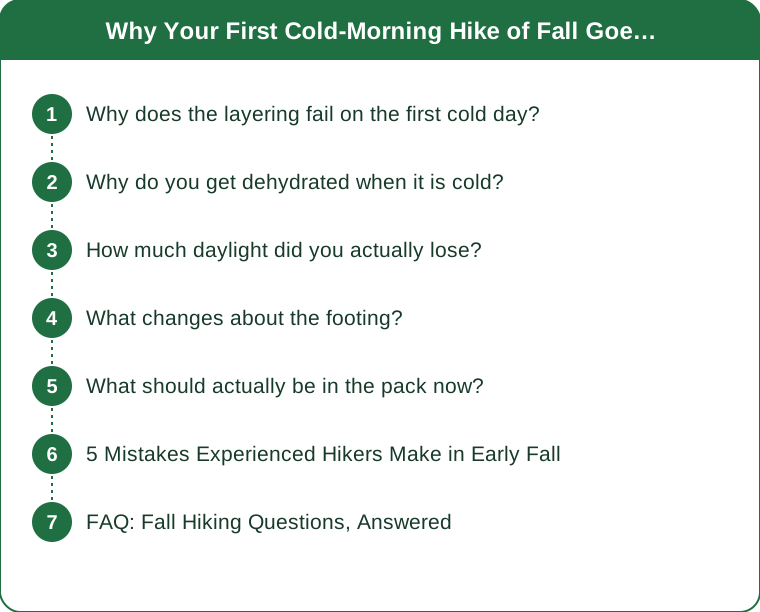
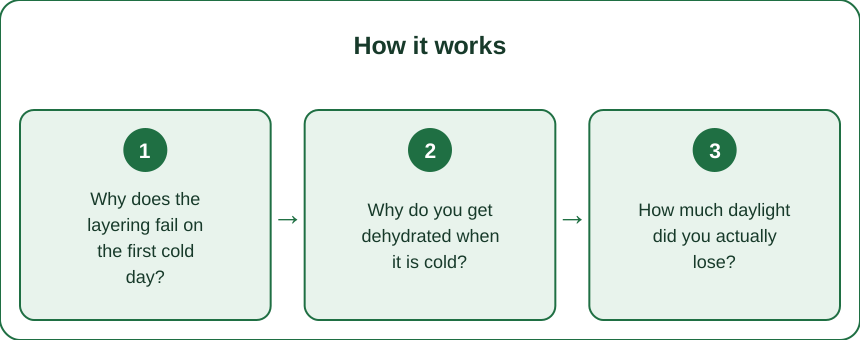
Why does the layering fail on the first cold day?
Because you dress for the trailhead temperature and then generate heat for two hours.
Here is the sequence that catches nearly everyone. The car thermometer says 45°F, so you put on a fleece and a shell. You start walking uphill. Within fifteen minutes you are working hard, your body is producing several hundred watts of heat, and you are sweating into the fleece.
You do not stop to remove it, because stopping is annoying and you are only ten minutes in. So the fleece gets damp. Then you reach a ridge, the wind hits, and you are wearing a wet insulating layer in moving air — which is the single most efficient way to lose body heat available to a hiker.
The rule that experienced cold-weather hikers use is be slightly cold at the start. Start at the trailhead feeling underdressed for standing around, because within ten minutes of climbing you will be perfectly comfortable. If you are comfortable standing still at the car, you are overdressed for walking.
The second half of it is adjusting early and often. Vent before you sweat, not after. Open the pit zips, drop the hood, take the hat off — small adjustments made early prevent the big one where you have to stop and change a base layer.
And the material matters more now than in summer. Cotton holds many times its weight in water and has essentially no insulating value when wet. In August a damp cotton shirt is a comfort issue. In October, on an exposed ridge at 40°F, it is a genuine safety issue. Wool or synthetic next to skin, with no exceptions, once the mornings turn.
One overlooked layer: a dry base layer in the pack. It weighs almost nothing, and changing into it before a long descent or a summit stop transforms the second half of the day. It is the item most often skipped and most often wished for.
Why do you get dehydrated when it is cold?
Because thirst is a poor gauge in cold air, and you lose more water than you notice.
Cold exposure blunts thirst. Research on cold-weather activity consistently shows people voluntarily drink substantially less than they need, even with water freely available. The sensation just does not arrive with the same urgency.
Meanwhile your losses are not much lower than in summer. You are still sweating under those layers. And you are losing a surprising amount through respiration — cold air is dry air, you humidify every breath you take, and at hiking breathing rates that adds up over several hours.
Then there is the practical friction. In summer you drink because the bottle is right there and drinking is pleasant. In fall the bottle is buried under a jacket in the pack, the water is unpleasantly cold, and stopping means getting chilled. Every one of those is a small reason not to drink, and they compound across a day.
The symptoms are the confusing part. Mild dehydration in cold weather does not present as thirst. It presents as fatigue, a headache in the afternoon, feeling colder than the temperature warrants, and a general sense that today’s hike is harder than it should be. Those get attributed to the season, or to being out of shape, or to a bad night’s sleep.
The fixes are logistical, not physiological. Keep water accessible — a bottle on the shoulder strap or a hose you do not have to stop for. Drink on a schedule rather than on thirst: a few mouthfuls every 20 minutes works. Bring something warm, because a thermos of tea gets consumed when cold water does not. And add electrolytes if you are out for more than a couple of hours, since you are still losing salt even when you cannot see the sweat.
How much daylight did you actually lose?
More than most people estimate, and the loss accelerates through fall.
Through September and October, daylight in the mid-latitudes shrinks by roughly two to three minutes a day — around 20 minutes a week. Six weeks after the peak of summer you have lost close to two hours of usable light, and the loss comes off both ends.
That matters in a specific way for hikers: your summer mental model of a trail includes a large buffer of light at the end of the day. You did that eight-mile loop in July starting at 10am and finished with hours to spare. The same start in mid-October leaves far less margin, and you have not recalculated because the trail feels familiar.
The compounding factor is that fall hikes are often slower. Wet leaves slow the descent, you stop more to adjust layers, and the photography is better. So you are moving more slowly through less daylight while planning from a faster, longer-daylight memory.
The other half is quality of light, not just quantity. The sun sits lower, so valleys, north-facing slopes and forest sections go into effective darkness well before official sunset. A trail that is comfortable at 5:30pm in July can be genuinely dim at 5:30pm in October even though the sun has not set.
What to actually do: look up sunset for the specific date, not the season, and work backwards with a one-hour buffer. Add time to your summer pace estimate rather than subtracting it. And carry a headlamp on every fall hike, including the short ones — it weighs a few ounces and it is the difference between an inconvenience and an incident. Phone flashlights drain a battery that is already dropping faster in the cold.
What changes about the footing?
Three things, and the first one is genuinely underestimated.
Wet leaves are slippery in a way that surprises people. A layer of fresh fallen leaves over wet rock or wet root has very low friction, and it also hides what is underneath — the rock, the root, the hole, the edge of the trail. This is the classic fall ankle-injury mechanism, and it happens most often on descents when hikers are moving faster and paying less attention.
Overnight moisture lingers. In summer, morning dew burns off in an hour. In fall, with a low sun and cooler air, shaded sections can stay wet all day. Wooden boardwalks, bridges and rock slabs that were reliably dry in August are now slick until afternoon, if at all.
Frost appears before you expect it. In the shoulder season, exposed high ground can be at or below freezing at dawn while the trailhead is comfortably above it. Thin frost on rock is nearly invisible and offers essentially no grip.
The adjustments are simple and mostly about pace. Slow the descent — most falls happen going down, and fall conditions widen the gap between uphill and downhill risk. Shorten your stride on leaf cover, which keeps your center of mass over your feet. Use trekking poles if you own them; they are more valuable in fall than in summer for exactly this reason.
And check your footwear before the season starts. Tread wears gradually and you do not notice until it matters. Run a finger over the lugs on your outsole — if they are rounded off, the shoe that felt fine on dry summer dirt will not hold on wet leaves. That is a low-drama, easy-to-fix cause of a bad afternoon.
What should actually be in the pack now?
Summer packs get lighter through July and August as you learn you did not need things. Fall reverses that, and the additions are small.
The four non-negotiables:
Headlamp. Every hike, no exceptions, including the two-hour one. Check the batteries at the start of the season.
Insulating layer you have not sweated into. A packable puffy or a fleece that stays in the pack while you hike and comes out at stops. The layer you wore uphill is not the layer that will keep you warm standing at a summit.
Wind shell. Wind is what converts a manageable temperature into a cold one. A shell weighs a few ounces and is the highest-value-per-gram item in a fall pack.
Hat and thin gloves. Extremities are where fall discomfort shows up first, and both pack down to nothing.
Then the things that quietly matter:
More food than summer. You burn more maintaining body temperature, and appetite in cold weather is unreliable — bring things you will eat cold, since a bar that is rock-hard at 40°F often stays in the pack.
A thermos. Optional, transformative. A warm drink at the turnaround point changes how the second half feels and gets fluid into you when cold water will not.
Dry socks. Wet feet in cool weather are the difference between an enjoyable descent and a grim one.
A charged phone kept warm. Cold reduces battery performance markedly. Keep it in an inside pocket rather than an outer one, especially if it is your map.
What you can leave behind: the volume of water you carried in August, if — and only if — you have committed to actually drinking what you bring.
5 Mistakes Experienced Hikers Make in Early Fall
1. Trusting the trailhead temperature. The trailhead is usually the warmest, most sheltered, lowest point of the day. Conditions at elevation, on a ridge or in a wind gap can be 15 to 20°F colder in effect. Check the forecast for the summit, not the town.
2. Dressing for the start. The layering error described above is not a beginner mistake — it is specifically an experienced-hiker mistake, because experienced hikers have a summer routine they execute without thinking. Start slightly cold.
3. Using a summer pace estimate. Fall hikes are slower for structural reasons: footing, layer stops, shorter light. Add 20 percent to your summer time for the same route and you will be roughly right.
4. Skipping the headlamp on a short hike. The hikes that end in the dark are almost never the ones planned to. A twisted ankle at 4pm on a two-hour loop becomes a headlamp problem very quickly.
5. Assuming the trail is the same trail. Blowdown, washouts and re-routes accumulate over a summer, and leaf cover can obscure trail edges and cairns. A familiar route in fall deserves slightly more navigational attention than it did in July, not less.
FAQ: Fall Hiking Questions, Answered
How cold does it need to be before I change my whole approach?
There is no single threshold, but the practical one is the first morning below about 50°F, especially with wind or damp. That is the day the summer habits stop working, and it is worth treating deliberately.
Is cotton really that bad?
For a warm afternoon walk, no. Once you are dealing with cool air, wind and the possibility of getting wet, yes — cotton loses essentially all insulating value when damp and dries very slowly. The base layer is the one place worth being strict about.
How much water for a four-hour fall hike?
Roughly 1.5 to 2 liters for most people, which is not far below a summer figure. The real issue is not how much you carry but how much you drink. Aim for a few mouthfuls every 20 minutes and check the bottle at the turnaround.
Do I need different shoes for fall?
Not necessarily different, but check the tread depth on what you have. Worn lugs are the single biggest footwear factor on wet leaves. Waterproofing helps in the wet season but matters less than grip.
What is the one thing to add if I only add one?
A headlamp. Cheap, light, and it addresses the failure mode — running out of daylight — that turns a minor problem into a serious one.
TL;DR:
- Start slightly cold. If you are comfortable standing at the trailhead, you are overdressed for climbing and will sweat into your insulation.
- Cold air blunts thirst while respiration still costs you water — drink on a 20-minute schedule, not on thirst, and bring something warm.
- You have lost close to two hours of daylight since summer, and low sun darkens valleys well before official sunset. Carry a headlamp on every hike.
- Wet leaves hide what is underneath. Slow the descent, shorten your stride, and check your outsole tread before the season starts.
- Add four things to the pack: headlamp, dry insulating layer, wind shell, hat and gloves. All of it fits in the space your summer water took up.
The first cold hike of the year goes wrong because four separate summer habits expire on the same morning. Fix them one at a time and the rest of the season is the best hiking of the year.
Keep Reading
This article is for general informational and styling purposes only. Fit, sizing, and product availability may vary — check current details before purchasing.