How to Hike Uphill Without Getting Exhausted
Quick Answer: To walk uphill without getting tired, slow to a pace you can hold a short conversation at, shorten your steps to about half your normal stride, and use the rest step — briefly locking your back leg straight between steps so your skeleton takes the load instead of your muscles. Sync your breathing to your steps and stay tall. Most people struggle uphill because they’re going too fast, not because they’re unfit.
The trail tilts up. Two minutes later your legs are burning, your lungs are ragged, and you’re doing that thing where you stop and pretend to look at the view.
The bad news: that’s a pacing failure, not a fitness ceiling. The good news: pacing is fixable in one hike.
Why Do I Struggle to Walk Uphill?
Almost always because you’re climbing above your aerobic threshold.
Going uphill demands substantially more energy than walking flat — you’re lifting your entire bodyweight vertically with every step. Most hikers unconsciously try to maintain their flat-ground speed when the trail tilts, which pushes them anaerobic. Once that happens you accumulate fatigue faster than you can clear it, and no amount of willpower reverses it mid-climb.
The tell is your breathing. If you can’t speak a short sentence, you’re above threshold and burning through reserves you’ll want later. Back off until you can, and you’ll climb further with less suffering — often arriving sooner, because you stopped taking recovery breaks every four minutes.
Ego is the actual enemy on a climb. The person who passes you at the trailhead is frequently the person you pass at the halfway mark, sitting on a rock.
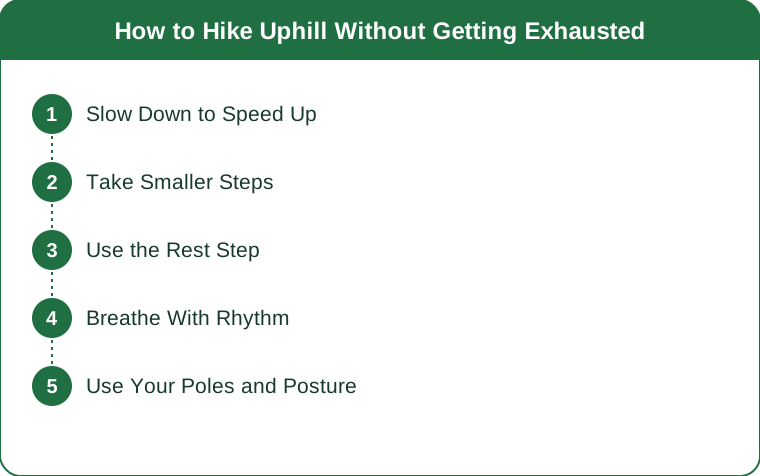
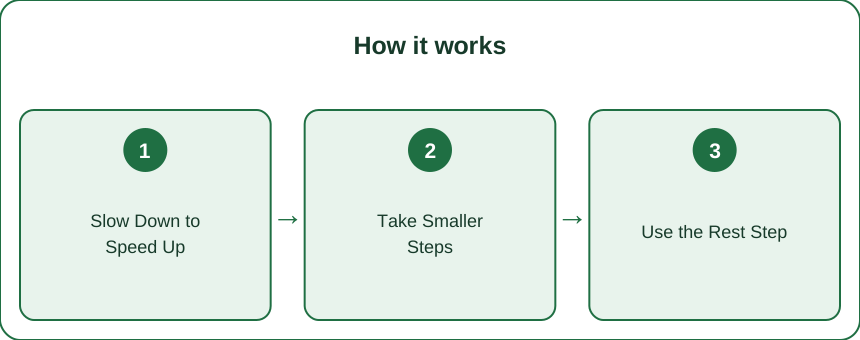
Take Smaller Steps
This is the single most effective technique change most hikers can make, and it feels counterintuitive.
A big lunging step onto a high rock requires your quad to lift your whole bodyweight through a large range in one effort — essentially a loaded single-leg squat. Do that 400 times and your legs quit. Halving your step height roughly halves the effort per step, and while you take more steps, the total energy cost drops because you stay out of the burning, high-force range.
On steep sections, look for the smaller intermediate foothold rather than the obvious big one. Small and steady genuinely wins here.

Use the Rest Step
This is the mountaineering technique that changes long climbs, and hardly any casual hikers know it.
How to do it: step up with your lead foot but don’t immediately push off. Instead, let your weight settle onto your back leg with the knee fully locked straight, and pause for a beat. With the knee locked, your skeleton carries the load rather than your quad. Then transfer weight to the front foot, step through, and lock the new back leg.
That half-second of locked-knee rest, repeated hundreds of times, adds up to a meaningful amount of muscular recovery inside continuous movement. On a sustained climb it’s the difference between needing a stop every 10 minutes and not needing one at all.
It feels slow and slightly robotic at first. Give it 50 steps.
Breathe With Rhythm
Pair your breath to your steps so oxygen delivery stays steady instead of chasing your effort.
A common pattern is inhale for 2 steps, exhale for 2 steps on moderate grades, dropping to 1-and-1 on steep pitches. The specific ratio matters less than having one — a fixed rhythm prevents the ragged, shallow gasping that means you’ve already overreached.
Pressure breathing helps at altitude or on brutally steep sections: exhale forcefully through pursed lips, like blowing out a candle. It fully empties your lungs so the next inhale is a full one.
If your rhythm breaks down, that’s your signal to slow the legs — not to breathe harder.
Use Your Poles and Stand Tall
Trekking poles transfer some of the climbing work to your arms and shoulders — a meaningful share of the effort on sustained ascents — and they reduce the load through your knees. Set them shorter than your flat-ground length for climbing, so you’re planting them ahead and pulling slightly rather than reaching down.
Posture matters more than people expect. The instinct on a steep pitch is to hunch forward and stare at your boots, which compresses your ribcage exactly when you need maximum lung volume. Stay tall, hinge from the ankles rather than the waist, and look 10–15 feet up the trail. Open chest, open lungs.
What Nobody Tells You About Climbing
- Eat before you’re hungry. On a long climb, take in 200–300 calories per hour starting from the first hour. Once you’re actually hungry, you’re already behind and recovery mid-climb is slow.
- Micro-stops beat long stops. A 20-second pause to breathe keeps your rhythm. A 10-minute sit-down lets your legs stiffen and your heart rate drop so far that restarting feels awful.
- Switchbacks aren’t optional decoration. Cutting them is steeper, harder, and erodes the trail. Walk the long way; it costs less energy.
- The first 10 minutes always feel bad. Your body takes roughly that long to shift into aerobic gear. Don’t judge the day by minute three.
- Downhill hurts more the next day. The soreness you feel on Sunday is mostly from descending, not climbing. Poles help there even more than they do going up.
FAQ
How do I walk uphill without getting out of breath?
Slow down until you can speak a short sentence, and lock a breathing rhythm to your steps — 2 steps in, 2 steps out on moderate grades. Being out of breath is a pacing signal, not a fitness verdict, and most people can fix it in the first five minutes of a climb.
Is it better to take small fast steps or big slow ones uphill?
Small steps, essentially always. A large step demands a near-maximal effort from one leg, while smaller steps keep each effort well below your muscular limit — which is what lets you sustain the climb without stopping.
Should I stop to rest on a long climb?
Prefer frequent short pauses of 20–30 seconds over infrequent long ones. Long stops let your legs cool and stiffen and your heart rate drop, making the restart much harder. The rest step gives you built-in recovery so you need far fewer stops overall.
TL;DR:
- Slow to conversation pace — struggling uphill is usually a pacing problem, not fitness.
- Halve your step size; small steps cost far less per effort than big lunges.
- Use the rest step: lock the back knee straight for a beat so bone takes the load.
- Breathe in a fixed rhythm, 2 steps in / 2 steps out, and stay upright.
- Shorten poles for climbing, eat 200–300 calories per hour, and take short frequent pauses.
Keep Reading
This article is for general informational and styling purposes only. Fit, sizing, and product availability may vary — check current details before purchasing.